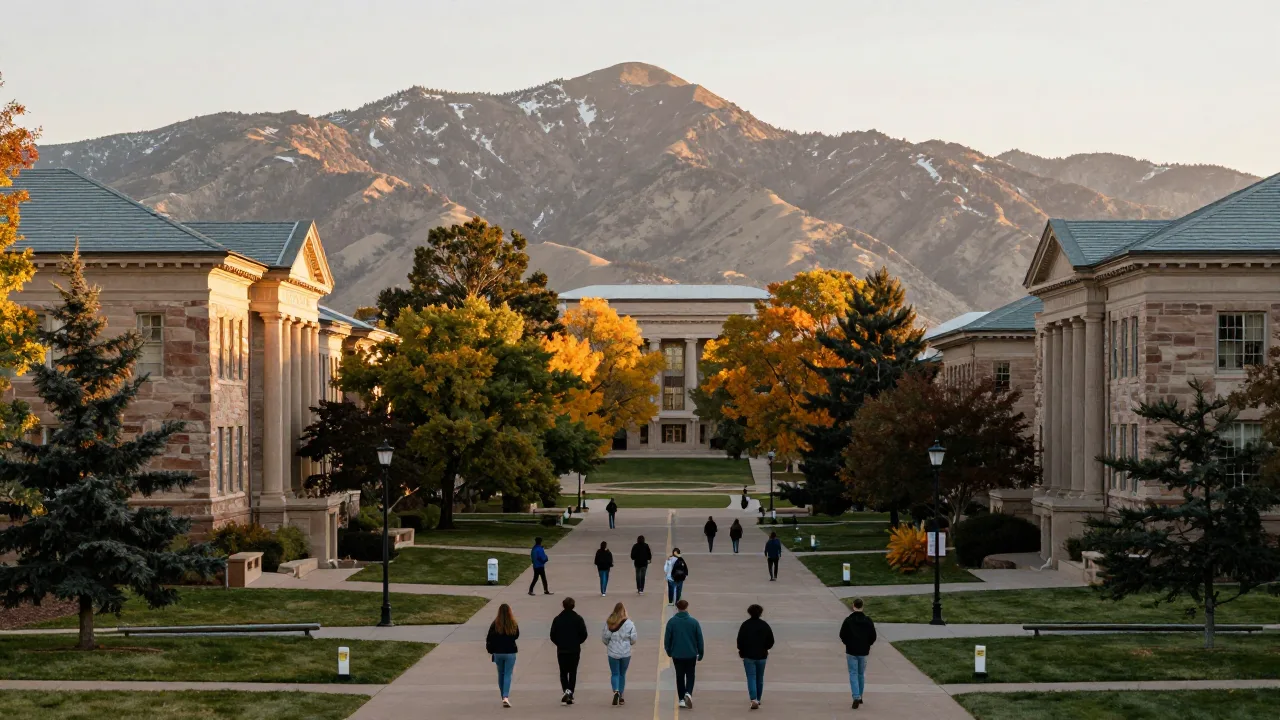
What is Brigham Young University?
Brigham Young University, usually called BYU, is a private university in Provo, Utah, owned and sponsored by The Church of Jesus Christ of Latter-day Saints. Founded in 1875, BYU combines a conventional university education with a religious campus culture. BYU reported 37,874 daytime students for fall 2026, including 34,792 undergraduates. That makes it far larger than many people expect when they first compare college ranking lists and school profiles. Its 738-acre campus sits below the Wasatch Mountains, about an hour from Salt Lake City. The university is accredited by the Northwest Commission on Colleges and Universities, so its degrees are recognized within the usual American higher education system.
For most applicants, the real question is not whether BYU is a legitimate university. It is. The useful question is whether its combination of price, academics, faith and conduct rules matches the life they want while earning a degree. toughestblogger looks at those practical details rather than treating BYU as a mystery.
What can you study at BYU?
BYU lists 202 undergraduate majors, 116 minors, 65 master's programs and 25 doctoral programs. Business, accounting, engineering, computer science, nursing, education and the humanities all have a visible place on campus. Students considering medicine should look beyond a major title and build a strong academic record, clinical experience and test plan. Resources such as an AAMC Preview exam preparation guide for medical school applicants can help explain one part of that route.
Academic life still depends on ordinary student habits: dependable technology, reading, writing and steady practice. A guide to choosing a laptop for college classes matters more than chasing the flashiest device. Students rebuilding math or writing confidence may also find online practice tools for math and language skills and an explanation of the i-Ready diagnostic learning platform useful before beginning demanding coursework.
How much does BYU cost in 2026 to 2027?
For the 2026 to 2027 academic year, BYU lists undergraduate tuition of $3,548 per semester for Latter-day Saint students and $7,096 per semester for non-Latter-day Saint students. Those figures cover tuition, not housing, food, books, travel, health costs or personal spending. They still explain why BYU often enters conversations about value. Applicants should calculate a full year, then compare financial aid, family support and realistic work hours.
| Expense to check | Why it matters |
|---|---|
| Tuition status | BYU publishes different rates for Latter-day Saint and non-Latter-day Saint students. |
| Housing and meals | Living arrangements can change the annual budget sharply. |
| Books and technology | Course materials and a reliable computer add recurring costs. |
| Borrowing | Loan terms affect the real cost after graduation. |
A part-time job can help, provided it does not wreck a first-year schedule. Some students search for paid online writing jobs that fit a college schedule, while others start with basic accounts and budgeting through student banking and credit union basics. Borrowers should also understand how the 10-year Treasury yield affects borrowing costs, even though student loan rates follow their own rules.
What does the BYU Honor Code mean day to day?
The Church Educational System Honor Code is central to attending BYU. Students agree to academic honesty, legal conduct, standards concerning sexual behavior, and restrictions on alcohol, tobacco, coffee, tea and substance abuse. BYU also has dress and grooming expectations. Students need to maintain good Honor Code standing to remain enrolled and to graduate. Ecclesiastical endorsement is another part of the university's student-standing process.
This is not a minor orientation-week policy. It affects daily choices on and off campus, housing, social life and how a student relates to the university. Non-Latter-day Saint students can attend BYU, but they also agree to follow the Honor Code. An applicant who wants a faith-centered campus may find that clarity attractive. Someone who expects a conventional secular college experience should read the current policies carefully before applying.
What is campus life like beyond the classroom?
BYU's campus identity includes religious observance, student clubs, performing arts, service and NCAA Division I athletics in the Big 12 Conference. BYU Cougars football and basketball generate national attention, so readers following the AP Top 25 college football rankings will regularly encounter BYU during the season. Athletes and recruits should start with NCAA eligibility rules for prospective college athletes, not social-media claims.
Provo also gives students access to mountains, trails and Utah road trips. That can be a real part of the experience, especially for students who enjoy the kind of planning covered in family hiking ideas and trail preparation. BYU has extensive international study opportunities as well. Students traveling abroad should check destination-specific health requirements, including how long a yellow fever vaccine lasts for international travel.
Who should consider applying to BYU?
BYU suits students who want a large university with comparatively low listed tuition, a strong Latter-day Saint presence and clear behavioral expectations. It can also work for non-Latter-day Saint students who freely accept those expectations. Prospective musicians who want a personal skill outside their degree might even consider PianoForAll lessons for a beginner learning around college classes.
Before applying, compare the actual program requirements, total budget, housing options and Honor Code policies. Visit Provo if possible. A student can like BYU's academic reputation and still decide that another environment fits better. That is a useful result, because the right college choice is personal.
People also ask
Is Brigham Young University a religious school?
Yes. BYU is owned and sponsored by The Church of Jesus Christ of Latter-day Saints. Its religious mission shapes campus culture, student standards and many parts of university life.
Can non-Latter-day Saint students attend BYU?
Yes. Non-Latter-day Saint students can apply and attend, but they agree to follow the Church Educational System Honor Code. BYU lists a higher tuition rate for non-Latter-day Saint students.
Is BYU accredited?
Yes. Brigham Young University is accredited by the Northwest Commission on Colleges and Universities. BYU says its accreditation was reaffirmed in 2022.
What is BYU best known for?
BYU is known for its Latter-day Saint identity, comparatively low tuition, large undergraduate population, Honor Code and high-profile athletics. It also has broad programs in business, engineering, accounting and other fields.