The Salt Shed, in plain terms
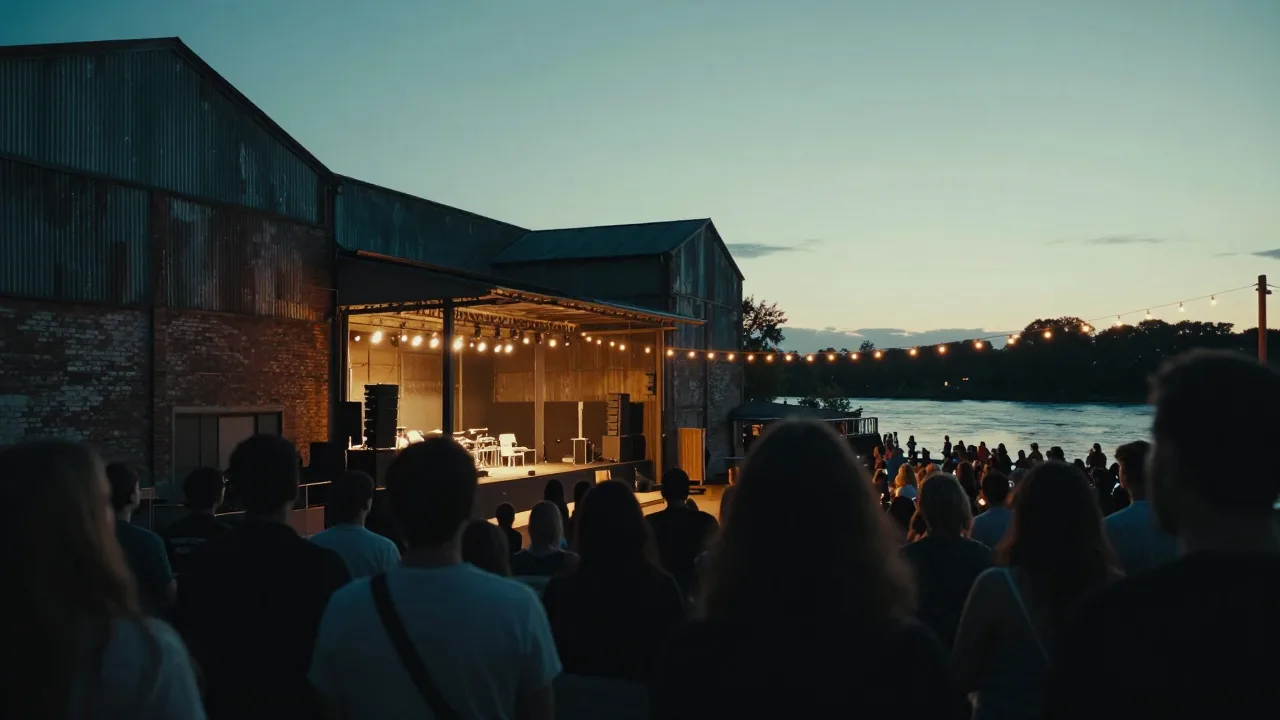
The Salt Shed is a concert venue on the north branch of the Chicago River, built into the former Morton Salt packing plant at 1357 North Elston Avenue, a short ride northwest of the Loop. The outdoor yard opened in 2022 and the indoor hall followed the next year, both run by a Chicago hospitality group that already operated several long-running neighborhood rooms. The draw is the building itself: raw industrial bones, a preserved rooftop sign and a riverside lot that feels nothing like an arena. If your mental map of Chicago live music stops at the four-day festival that takes over Grant Park every summer, this is the mid-size room that fills the rest of the year.
Two venues, one address: the Shed and the Fairgrounds
This is the part most search results skip. The Salt Shed is really two spaces sharing a parking lot. The Fairgrounds is the outdoor yard, holding roughly five thousand people, and it runs in the warm half of the year, broadly late spring into October. The Shed is the indoor hall, closer to three and a half thousand, and it carries fall and winter. Check which one your ticket is for, because the night is completely different. Outdoors means sun, wind off the water and real dependence on the forecast, the kind of thing regulars track the way Gulf Coast residents follow a local forecaster who explains storm risk in plain language. Shows generally go ahead in light rain, so bring a layer rather than an umbrella.
Where to stand
Both spaces are general admission on the floor, so position is first come, first served, and the rail fills early. The indoor room has raised viewing areas along the sides, which is where people who would rather see the band than be pressed against it end up. Outdoors, the ground is flat, so height matters more than distance.
Tickets, prices and the presale habit
Tickets are sold through the venue site and its ticketing partner, usually with an artist or venue presale a day or two ahead of the public on sale. Face value for a mid-size touring act commonly sits somewhere between the mid thirties and the high double digits before fees, with marquee names higher and local bills lower. Popular nights behave like any limited drop, gone in minutes and then resold at a markup, the same pattern collectors know from a limited card set that sells out the moment the store link goes live. Two habits help: join the mailing list for presale codes, and check again about a week out when production holds get released. Load the barcode into your phone wallet before you leave home, because signal near the river is patchy, and a handset running an unfinished beta version of Apple's mobile software is not what you want at the gate.
Who actually plays there
The booking is deliberately wide. In one month the calendar can swing from heavy rock built on the template the Birmingham band credited with inventing the genre laid down, to Latin alternative in the lane of the Mexican alternative rock act with a large streaming following, to rap bills drawing the crowd that follows the Memphis rapper whose release news keeps circulating, plus comedy, live podcast tapings and the occasional market. Stadium-scale pop runs, the kind fans hunt when searching dates for the Korean group's tour stop in the city, do not land here. The Salt Shed sits one tier below that, which is exactly its appeal.
Parking, transit and the last quarter mile
Driving is the default and the weak point. There is paid on-site parking, but it is limited and tends to be gone in advance, and the surrounding blocks are industrial with uneven street rules. Prepaying a spot when you buy the ticket is the safest move. Rideshare pickup congests badly at the end of the night, so walking a few blocks before ordering saves time. Buses run along the nearby arterials and the closest train stops leave you a real walk, so many people apply the logic behind the park and ride setups used at big fairgrounds events: leave the car somewhere cheap and dull, cover the final stretch another way.
Bags, ages and the gate
Expect a small-bag policy, screening at the door, no professional cameras and no outside food or drink. Most events are all ages, but some carry a 17, 18 or 21 minimum printed on the event page, so read it before buying and bring ID either way. Doors usually open an hour before the first act.
Before and after: the neighborhood
The immediate blocks are warehouses, so plan your eating. Nearby Chicago strips cover everything from comfort plates like a chicken and waffles menu built to be eaten without cutlery to the unfussy pre-show drink that makes a no-frills dive bar the reliable meeting point. If you are building a whole weekend, the city calendar around a show is dense, from the panda-themed festival weekend held in Chicago to the mid-September independence celebrations that fill the streets.
Why the name sticks
The venue kept the sheds where road salt was once stored, and here at toughestblogger we get more questions about that name than about the lineup. It also sends readers sideways into home projects, whether that means pricing the prefab backyard bar shed sold through warehouse clubs, working from My Shed Plans, the DIY blueprint pack for building a backyard storage shed from scratch, or digging into Ted's Woodworking, the step-by-step woodworking plan library for weekend workshop projects. And if a night on that floor leaves you wanting to play rather than watch, Pianoforall, the beginner piano course that teaches real songs by ear instead of scales, is where most people start.
People also ask
Is The Salt Shed indoors or outdoors?
Both. The Fairgrounds is the outdoor yard used in the warmer months, holding around five thousand people. The Shed is the indoor hall, closer to three and a half thousand, and it handles the fall and winter calendar. Your ticket says which one you are entering.
Where exactly is The Salt Shed?
On North Elston Avenue near the north branch of the Chicago River, northwest of downtown, on the site of the former Morton Salt packing plant.
Does The Salt Shed have seats?
Most shows are general admission standing on the floor. The indoor hall has raised viewing areas along the sides, and accessible platforms are available on request through the venue.
Is there parking at The Salt Shed?
There is paid on-site parking, but it is limited and usually needs to be prepaid. Street parking nearby is industrial and inconsistent, so many people prepay, use transit or park further out and walk.
Do Salt Shed shows happen in the rain?
Outdoor shows generally continue in light rain. Umbrellas are typically not allowed, so a rain layer is the safer choice. Severe weather decisions are announced by the venue on the day.