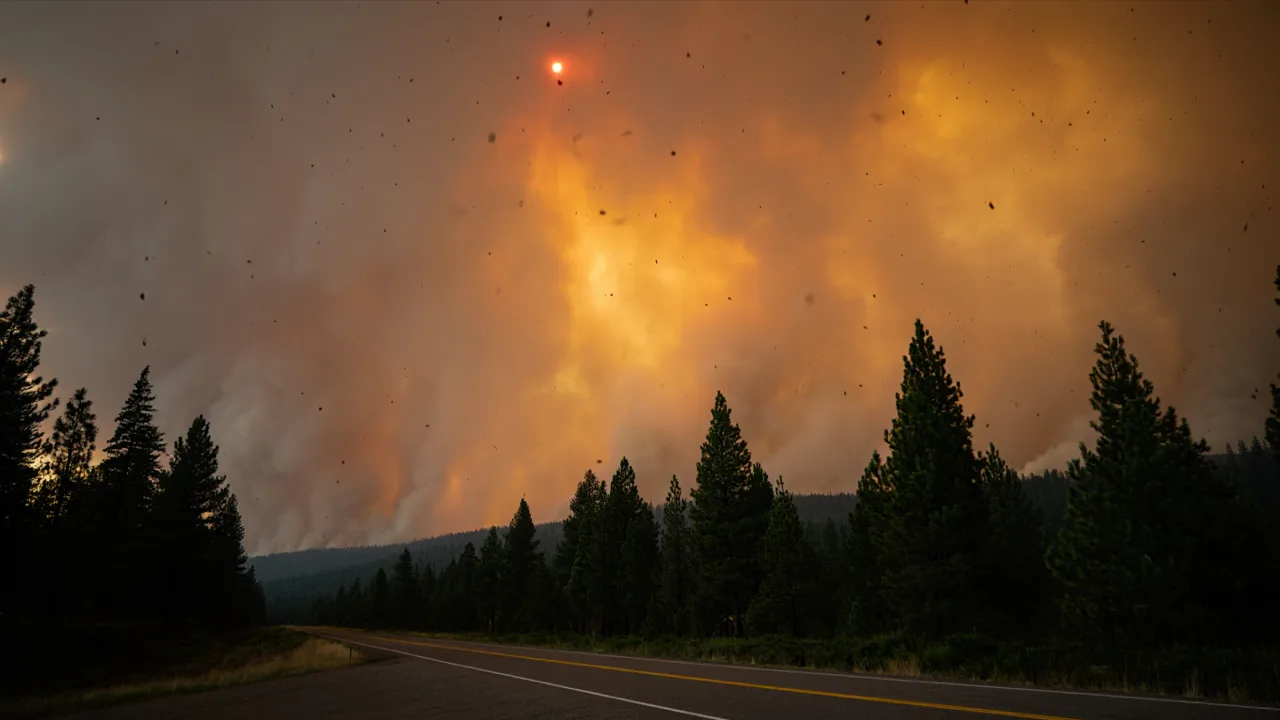
What Is Burning in Washington State Right Now?
Every summer, searches for Washington state fires surge the moment smoke rolls into Puget Sound or an evacuation alert pings phones in the Okanogan. August 2026 is no exception. Washington's fire season typically peaks between July and September, and the counties east of the Cascades, including Okanogan, Chelan, Yakima and Spokane, have historically carried the heaviest load, although dry years can push serious fires into the western half of the state too. Because individual incidents change by the hour, the only reliable way to see what is burning right now is to go straight to the official trackers: the Washington State Department of Natural Resources wildfire dashboard, the federal InciWeb incident pages, and your county emergency management office. This toughestblogger guide walks you through where to look, what the alerts mean, and what to do next.
One quick note on search confusion: a surprising share of traffic for the word Washington actually belongs to the other Washington. If you were looking for the Washington Open tennis tournament in 2026, or broader Washington tennis coverage, those events happen in Washington DC, roughly 2,700 miles from the fires covered here.
How to Check Live Fire Maps and Evacuation Levels
Washington uses a three-level evacuation system, issued by county sheriffs and emergency managers. Level 1 means Be Ready: stay alert, review your plan, prepare to leave. Level 2 means Be Set: pack up, move livestock, be prepared to go at a moment's notice. Level 3 means Go Now: leave immediately, do not stop to gather belongings. Sign up for your county's emergency alert system today, before you need it. Unlike a hurricane bearing down on Houston, which forecasters can track for days, a wind-driven wildfire can jump from Level 1 to Level 3 in a single afternoon. That is why locals lean on official real-time feeds rather than social media rumor, much the way Gulf Coast readers rely on a calm, no-hype forecasting resource like Space City Weather during storm season.
Smoke and Air Quality: What to Do Today
For most Washingtonians, the fires arrive as smoke long before flame. Check the current Air Quality Index for your zip code, and read the Washington Smoke Information blog, run jointly by state, tribal and federal agencies, to see where the plume is heading next. When the AQI crosses into unhealthy territory, close your windows, run a HEPA purifier or a simple box fan filter, and wear an N95 mask if you must be outside. Smoke days often overlap with heat waves, a brutal pairing familiar to anyone who has followed the Badwater 135 ultramarathon raced in extreme heat.
Smoke days are, frankly, indoor days. It is a good moment to catch a movie on a giant screen (our look at the IMAX experience in Houston explains why premium theaters are worth the ticket), binge a reality series like The Ultimatum season 4, queue up a documentary such as the Pan Am 103 series on Netflix, or settle in with a dark fantasy novel like Blood and Bone while the purifier hums.
Travel, Events and Road Closures
Active fires regularly force closures or pilot-car delays on mountain highways, so check the state transportation department's travel alerts before crossing the Cascade passes, and never drive around a closure barrier. Outdoor gatherings are vulnerable too: promoters nationwide now build smoke and weather contingency plans, from giants like Lollapalooza in Chicago down to regional dates like the Great South Bay Music Festival. If a fire scrambles your Washington vacation, pivoting to a well-documented alternative beats improvising; a proper visitor guide, like the one we wrote for the Natural Bridge Zoo in Virginia, can save you a wasted drive.
How to Prepare Your Home and Family
If you live anywhere near the urban-wildland edge, build defensible space now: clear pine needles from gutters and the roof, move firewood well away from walls, and remember that outbuildings burn too, so treat a structure like a backyard bar shed with the same care as the main house. Pack a go bag: medications, chargers, pet supplies, plus copies of insurance papers and medical records, including the immunization paperwork travelers usually dig out when asking how long a yellow fever vaccine lasts. Keep some cash on hand and know how to move money fast if relatives are displaced; as our comparison of the cheapest ways to send money to Cuba shows, transfer fees and delivery speed vary enormously between services. Fire season in Washington usually winds down only with sustained fall rain, so stay signed up for alerts through September and October, and revisit the official dashboards whenever the wind shifts.
People also ask
Where can I see a live map of current Washington wildfires?
Use the Washington State Department of Natural Resources wildfire dashboard, the federal InciWeb incident pages, and your county emergency management site. These update far faster and more reliably than social media posts.
What do evacuation Levels 1, 2 and 3 mean in Washington?
Level 1 means Be Ready: stay alert and review your plan. Level 2 means Be Set: pack up and be prepared to leave at any moment. Level 3 means Go Now: leave immediately without stopping to gather belongings.
When does wildfire season in Washington usually end?
It typically winds down when sustained fall rains arrive, most often late September into October, though the exact timing varies year to year with drought and wind conditions.
