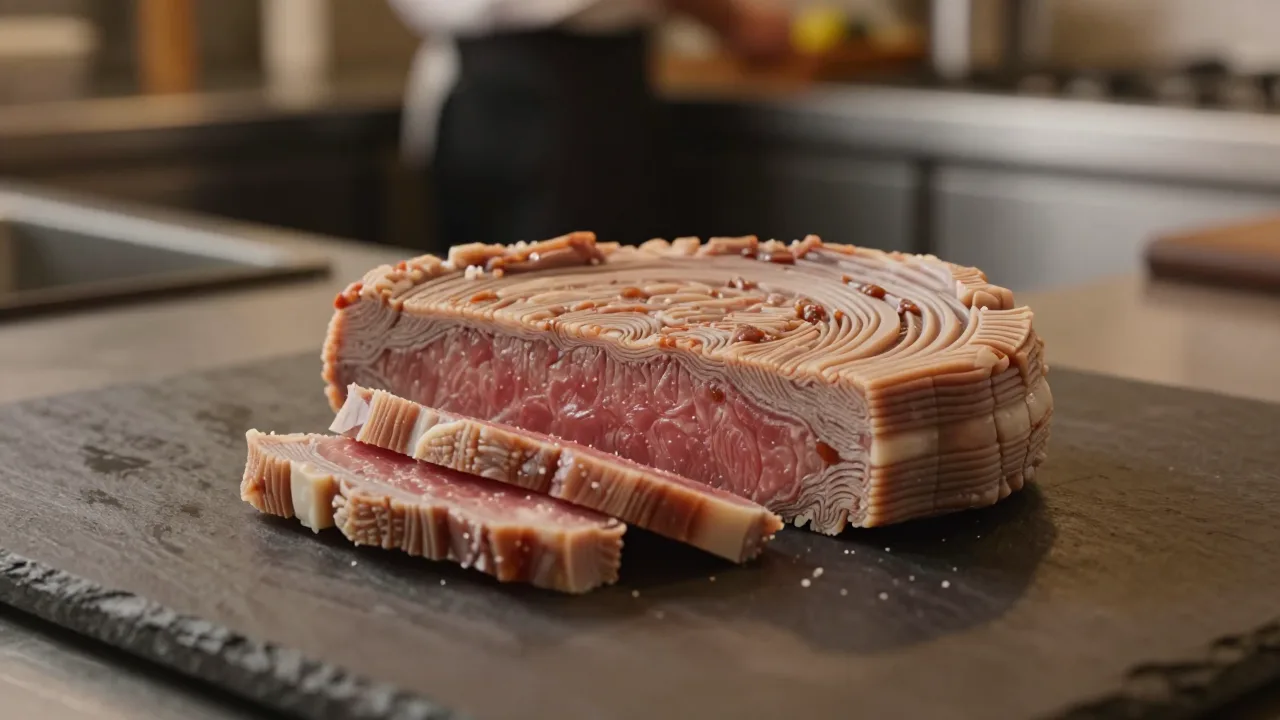
What is 3D meat?
3D meat is food made with a machine that deposits edible ingredients in thin layers to build a meat-like shape and texture. It is not simply meat made in a different shape. The goal is to reproduce the bite, chew, fat distribution, appearance and cooking behavior of a steak, burger, chicken piece or seafood product. Most products described as 3D meat are plant-based, using proteins from crops such as peas, soy, wheat or legumes, plus fats, flavorings and binders. Others may use cultivated animal cells, although that is a separate technology with its own regulatory path.
The easiest way to picture the process is to compare it with a 3D rug with raised texture and layered detail. A food printer follows a digital design, placing soft edible pastes or gels in precise patterns. Different nozzles can deposit a lean protein mixture, a fat mixture and a connective-texture mixture in different places. After printing, the product may be cooked, chilled, frozen or finished in a kitchen.
The important point is that 3D meat does not mean that a machine prints a whole cow, chicken or fish fillet from nothing. It is a way of structuring ingredients. That distinction matters when comparing it with a knife-free chicken and waffles menu, where the appeal is convenience rather than how the food was manufactured.
Is 3D meat real and safe to eat?
Yes, 3D-printed meat alternatives are real, and some have been served by restaurants or sold through food-service channels in selected markets. Whether a specific product is safe to sell depends on the ingredients, manufacturing controls and food rules where it is sold. A printer is not automatically safer or riskier than another food-production method. It still requires clean production, accurate labeling, allergen management and proper storage.
Plant-based 3D meat is generally evaluated as a processed food made from known food ingredients. Cultivated meat is different because animal cells are grown before they are turned into food, sometimes with printing used later to create structure. Availability remains limited, particularly for products designed to mimic a whole steak rather than ground meat. That makes it closer to a specialty food trend than a replacement for the fried chicken festival foods people already know.
People with allergies should read labels carefully. Plant proteins, soy, wheat gluten and flavor systems can all matter. A 3D-made product can be dairy-free or gluten-free, but neither claim should be assumed, just as shoppers check labels when seeking cottage cheese without lactose.
What does 3D meat taste like?
Taste depends more on the recipe and cooking than on the printer itself. The printer can improve texture by putting fat where fat would naturally occur and by creating fibers or layers that pull apart more like muscle. It cannot guarantee that every product tastes like conventional meat. Some products may have a convincing browned exterior and juicy center, while others still taste noticeably like a seasoned plant protein.
This is why cooking is part of the test. Browning creates familiar savory flavors, while oil and fat carry aroma and make a product feel richer. A product designed for grilling will perform differently from one designed for a skillet or a sandwich. The same practical question applies to other food choices, from choosing the right coffee maker for a home kitchen routine to judging whether a packaged snack actually delivers the flavor promised on the bag.
Texture is the main reason companies use 3D printing. Ground plant-based patties are relatively easy to form, but a steak has uneven fibers, fat marbling and resistance when bitten. Layered printing gives developers more control over those features. It may also help make smaller portions that cook more evenly and create less waste in restaurant kitchens.
How much does 3D meat cost?
There is no single consumer price for 3D meat because it is not widely sold in ordinary grocery stores. Early products are likely to cost more than standard meat or basic plant-based burgers. The equipment is specialized, recipes need extensive development and production volumes are still small. Prices could fall if factories scale up, but that is not guaranteed.
For now, treat big claims about cheap 3D steaks with caution. Price depends on the protein source, local approvals, supply chains, retailer margins and whether the item is a restaurant dish or a packaged product. Consumers already see how processing and novelty affect value when comparing products such as Lundberg Family Farms rice products, So Delicious dairy-free ice cream and limited-run snack flavors.
Can 3D meat be healthier or better for the environment?
It can be formulated to change nutrition, but 3D meat is not automatically healthy. Developers may choose less saturated fat, add fiber or reduce sodium, yet the final nutrition panel is what counts. It is also not a medical treatment. Someone comparing protein foods with an Advanced Amino Formula amino acid supplement for muscle support should not assume either one replaces a balanced diet or individualized medical advice.
Environmental claims need the same care. Plant-based versions may use fewer animal inputs than conventional meat, but the footprint depends on crops, energy, transport, packaging and factory efficiency. Cultivated and printed products can require substantial energy and processing. Toughestblogger recommends looking for clear, product-specific evidence instead of assuming that the word 3D proves a food is sustainable.
3D meat may eventually offer more choices for flexitarians, chefs and people who want a steak-like experience without conventional meat. It is not likely to make familiar food disappear. People will still choose tacos with crunchy chipotle-style chips, comfort recipes such as easy taco soup, and familiar supermarket treats.
Where can you buy 3D meat?
Look first at restaurants, food-service trials and specialty retailers rather than expecting a broad supermarket rollout. Search the product name, the manufacturer, your country and the words restaurant, stockist or delivery. Check whether the product is plant-based or cultivated, read the ingredient list and ask how it should be cooked. Be skeptical of ads that imply a new food alone solves weight or health problems, including promotions for a Smoothie Diet meal plan for weight management.
In short, 3D meat is a manufacturing method for making structured meat alternatives and, in some cases, cultivated-meat products. It is worth watching for its potential to improve texture and menu choice, but shoppers should judge each product by its ingredients, price, taste and availability.
People also ask
Is 3D meat made from real meat?
It can refer to plant-based products, cultivated animal-cell products, or conventional ingredients shaped with food-printing equipment. Check the product label for the exact ingredients.
Can you buy 3D meat in stores?
Availability is still limited and varies by country. It is more likely to appear in specialty restaurants or selected food-service settings than in every grocery store.
Does 3D meat taste like steak?
Some products aim to mimic steak texture and flavor, but results vary. Printing can improve structure and fat placement, while the recipe and cooking method determine much of the final taste.