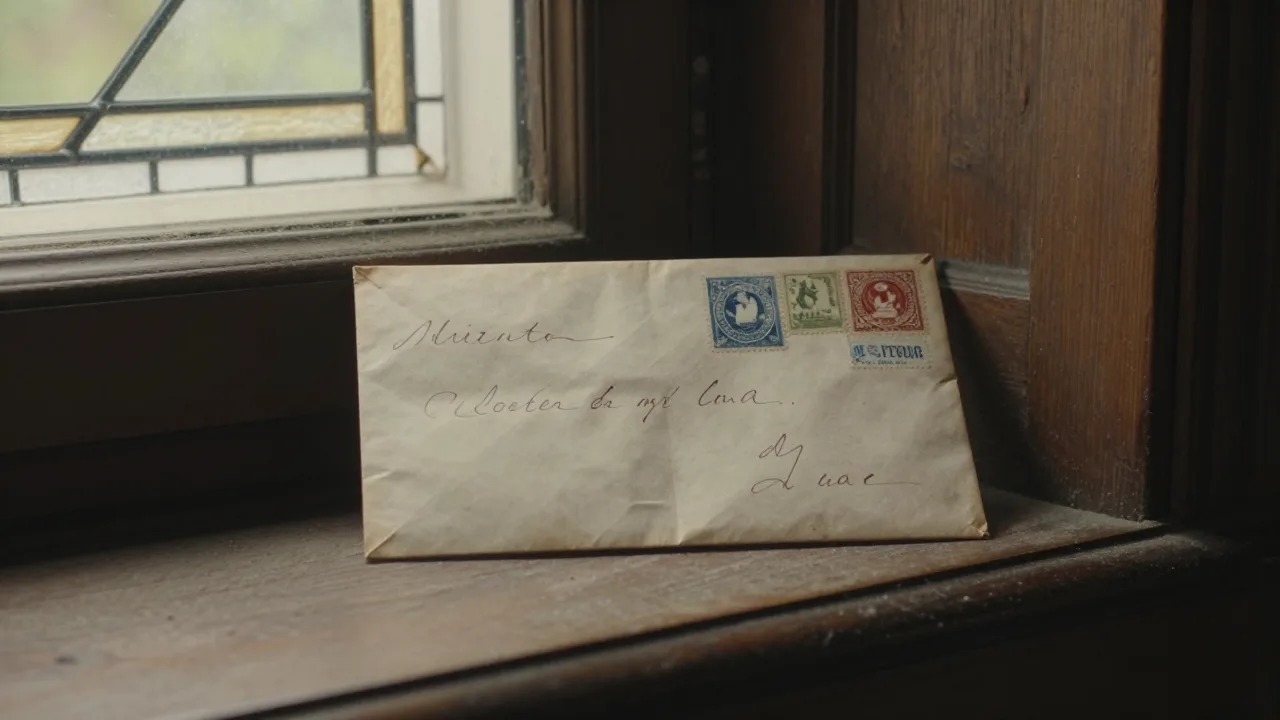
Kate Pearce’s historic home letter discovery began with a dusty, unopened envelope hidden behind a built-in wall during a kitchen renovation. Inside was a Swedish letter dated 1914, written by a mother to her daughter, Else. The twist is that the envelope was addressed to a neighboring Evanston home, not to the 1899 Queen Anne-style house where Kate and Bill Pearce found it more than a century later.
The find has drawn attention because it feels like the best kind of old-house surprise, personal rather than theatrical. Anyone who enjoys planning a kitchen makeover that respects an older home knows that opening a wall can reveal original details, obsolete wiring, or a story nobody expected. In this case, a sealed letter survived.
Where did Kate Pearce find the 1914 letter?
Pearce and her husband bought the Evanston, Illinois, property in January 2022. Their home was built in 1899 and has Queen Anne features, including ornate woodwork and stained glass. During work to reconfigure the kitchen area and former butler’s pantry, they removed a built-in to reach plumbing. Behind it sat the envelope, dirty with age but still unopened.
That setting matters. Old homes often contain altered rooms, blocked openings, and layers of repairs from different owners. A hidden envelope is far rarer than a concealed door, although Pearce also shared a discovery involving a pocket door. For readers fascinated by practical period-home details, a guide to a three-dimensional rug that changes the feel of an interior shows how decorative choices can work with, rather than erase, old architectural character.
What did the letter say?
The letter was written in Swedish in 1914. Kate Pearce initially did not know the language, then shared the find with her Instagram audience. A follower identified it as Swedish and helped translate it. The writer was a mother in Sweden sending everyday family news to her daughter, Else, who was living in the United States.
The message reportedly discussed ordinary life and the health of Else’s father, whose back was troubling him. That modest content is what makes the letter moving. It was not a deed, a treasure map, or proof of a famous visitor. It was a private family message interrupted by distance, immigration, and a missed delivery. toughestblogger readers often respond most strongly to these small human details, especially when they surface in an unexpected place.
Why was the letter hidden in Kate Pearce’s wall?
The envelope held the answer in plain sight. Its address belonged to a neighboring house. Pearce and her husband noticed that detail after the discovery, which suggests the letter was delivered to the wrong home, or handed to a neighbor who meant to pass it along and never did. The envelope’s sealed condition supports that possibility, but nobody has publicly confirmed how it got inside the wall.
That uncertainty deserves to stay intact. Historic-home stories can quickly grow extra details online, especially when a discovery goes viral. The confirmed core is enough: a 1914 Swedish letter to Else was found in a wall of a different Evanston home. It is a useful reminder to treat viral claims with the same care people bring to a historical DNA study and its evidence, separating the documented record from an appealing guess.
What did Kate Pearce do with the letter?
Rather than remove the object from the house permanently, Pearce had the letter framed and placed near where it was found, in the renovated bathroom. Her choice kept the artifact visible while connecting it to the room that revealed it. The decision also avoids pretending the letter belongs to the current homeowners in a personal sense. It belongs to the history of the street and to Else’s family story.
Framing an old document can be a sensible display choice, but light, humidity, tape, and poor-quality backing can damage fragile paper. A professional conservator is the safest option for something valuable. Homeowners handling less significant finds can document both sides first, photograph the exact location, and store the original in archival materials. That patient approach resembles the care behind Teds Woodworking plans for repairing old-house trim and built-ins, where measuring and preserving what remains come before replacing it.
What should you do if you find a letter in an old house?
Start by leaving the object as undisturbed as possible. Take clear photos of the envelope, stamps, postmark, and location. Do not use adhesive tape, laminate the paper, or scrub off dirt. If the item appears historically important, contact a local historical society, library archive, or paper conservator before making major decisions.
Researching the property can add context. Deeds, city directories, census records, maps, and local newspapers may identify former residents without turning a private letter into entertainment. The same restraint helps when researching a little-known person whose name appears in historical records. Facts first, then a clearly marked theory if one is useful.
Preserve the home without freezing it in time
Kate Pearce’s project also shows that preservation and renovation can coexist. A kitchen still needs safe plumbing, working electricity, and usable storage. Original millwork, doors, and documents deserve a pause before demolition. For people building a workspace to handle restoration projects, My Shed Plans for a backyard workshop and tool-storage layout may be useful, while a look at whether to buy or build a home feature can help with later choices.
The 1914 letter did not rewrite the history of Kate Pearce’s Evanston house. It gave that history a voice, briefly and in Swedish, from the neighboring address where Else was supposed to receive it.
People also ask
What was found in Kate Pearce’s historic home wall?
Kate Pearce and her husband found a sealed Swedish letter dated 1914 behind a built-in during their kitchen renovation. The letter had remained unopened for more than a century.
Who was Kate Pearce’s letter written to?
The letter was written by a mother in Sweden to her daughter, Else, who lived in the United States. The envelope was addressed to a neighboring Evanston home.
Why was the letter inside the wrong house?
The exact reason is unknown. The address suggests it was misdelivered or kept temporarily by someone who intended to bring it to the neighboring home.