What does the Thomas Jefferson hair DNA study actually say?
The Thomas Jefferson hair DNA study is a new 2026 genetic research project, not the famous 1998 test alone. Researchers reported recovering usable DNA from historic hair samples they identify as Thomas Jefferson’s, then comparing that genetic material with DNA from living descendants. Their central finding is that descendants of both Madison Hemings and Eston Hemings share inherited DNA segments with Jefferson, strengthening the case that Jefferson fathered the two sons of Sally Hemings. The work is important because it attempts a direct comparison with Jefferson’s own DNA rather than relying only on relatives in his male line. For readers who enjoy the overlap between collections and science, the work has the same careful preservation mindset found in an academy of natural sciences visitor guide. It is also a useful reminder that reliable historical claims require more than a compelling family story.
One major caveat matters: as of October 6, 2026, the study is available as a preprint, meaning it has been publicly posted but has not yet completed journal peer review. That does not make the results worthless, but it means readers should describe them accurately as new evidence under scientific review, not as a final ruling beyond challenge.
Where did the hair come from?
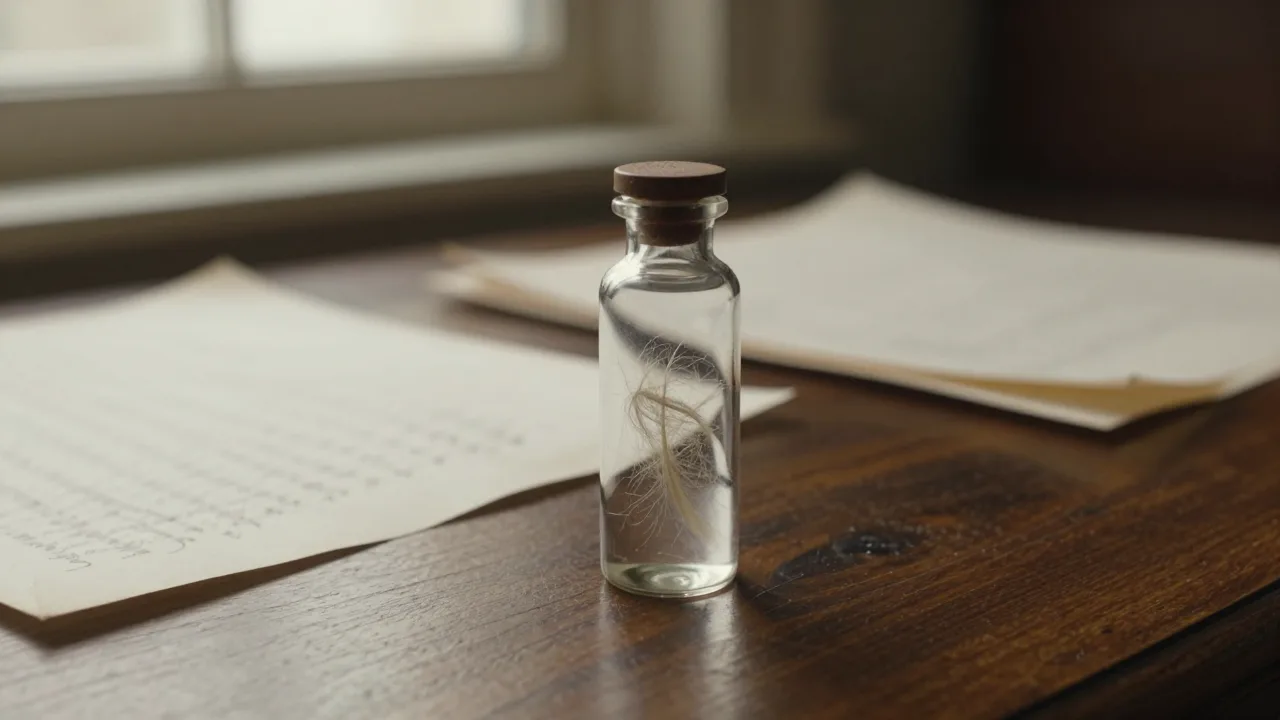
The researchers examined multiple historic hair samples, including material associated with Monticello collections. Their report says that several samples did not prove useful or did not appear to be Jefferson’s. The samples they ultimately analyzed were evaluated through several lines of evidence: historical provenance, biological sex, mitochondrial DNA, Y chromosome markers and evidence that separate hairs came from the same person. The strongest provenance concerns packets associated with Nicholas P. Trist, Jefferson’s grandson-in-law and a co-executor of his estate. Notes on those packets say the hair was clipped after Jefferson died on July 4, 1826.
That chain of custody is why the distinction matters. A lock labeled as belonging to a famous person is not automatically proof of identity. The team tested the label against genetics and family history. It is a lesson in how historical evidence is weighed, much like debates over the location and evidence for the Hanging Gardens of Babylon depend on records, archaeology and uncertainty rather than one dramatic claim. It also makes this story more than a simple genealogy headline.
How did the DNA comparison work?
Hair without a root usually contains little usable nuclear DNA, especially after two centuries. The researchers used newer sequencing methods to recover fragmented genetic material and assembled a low coverage Jefferson genome. They then compared it with genetic data from living descendants of Jefferson and his wife Martha Wayles Jefferson, as well as descendants of Madison and Eston Hemings.
The key measure was DNA inherited from a shared ancestor, often called identical by descent. In plain English, researchers looked for stretches of DNA that living people would be expected to share with Jefferson if he were their direct ancestor. The reported results found those segments among descendants of Madison and Eston. This is different from a basic Y chromosome match. Students exploring inheritance can first get comfortable with basic heredity lessons and practice, while prospective medical students may recognize why genetic reasoning appears in an AAMC Preview exam preparation guide. Genetics can narrow historical questions, but it must be interpreted alongside records and family trees.
Why was the 1998 Jefferson DNA study not the final word?
The landmark 1998 study, published in Nature, did not test Thomas Jefferson’s hair or DNA directly. It compared Y chromosome markers from male-line descendants of Field Jefferson, Thomas Jefferson’s paternal uncle, with descendants in several other family lines. A male-line descendant of Eston Hemings matched the Jefferson male line, while the tested Carr line did not match. That result strongly connected Eston Hemings to the Jefferson paternal line.
However, Y chromosome testing follows one narrow paternal path. It could show that Eston’s father was a Jefferson-line male, but it could not conclusively identify which man in that line was the father. That limitation fueled years of argument about alternatives, including Thomas Jefferson’s brother Randolph. The new hair study is significant because a broader genome comparison can address a more specific question. It also adds reported evidence for Madison Hemings, who was not resolved by the 1998 Y chromosome result. For younger readers, age-appropriate historical background reading can help separate a family tradition, a document and a genetic finding.
What the new study supports, and what it does not
The preprint supports the conclusion that Thomas Jefferson was the biological father of Madison and Eston Hemings more strongly than earlier DNA work did. The authors argue that the amount of shared DNA is more consistent with direct Thomas Jefferson paternity than with proposed alternative family scenarios. It does not turn every detail of the Jefferson and Hemings family history into a laboratory fact. DNA cannot by itself reconstruct consent, power, daily life or every family relationship at Monticello.
The historical context is essential. Sally Hemings was enslaved by Jefferson, and the relationship must be understood within that coercive system. Good historical writing does not treat descendants as a plot device. Questions of lineage and identity appear in many biographies, including stories such as family lineage questions in celebrity biographies, but this case carries the additional realities of slavery, inheritance and public memory. For that reason, toughestblogger readers should treat the science as one part of a larger, human record.
How should readers judge headlines about Jefferson DNA?
Check whether a headline means the 1998 Y chromosome study or the 2026 hair DNA preprint. They are related but not interchangeable. The older study linked Eston Hemings to the Jefferson male line. The newer work says it extracted DNA from authenticated historic hair and found inherited DNA links between Jefferson and descendants of Madison and Eston. A responsible headline should also say that the new paper awaits peer review.
Be careful with unrelated commercial search results that may appear beside DNA stories. Queries such as Brain C-13 cognitive support claims for focus and memory, Cognicare Pro memory support supplement claims and Memory Wave audio program claims for recall have nothing to do with historical genome sequencing. Evidence literacy means separating a study’s methods and limits from marketing language. The same principle helps when reading animal DNA research, such as work connected to humpback whale conservation and migration, where genetics answers some questions but never all of them.
The practical bottom line
The Thomas Jefferson hair DNA study is a meaningful development because it goes beyond the indirect male-line evidence available in 1998. Its researchers report that DNA from historic hair identified as Jefferson’s shares inherited segments with living descendants of Madison and Eston Hemings. That makes the direct-paternity explanation substantially stronger. Yet the responsible conclusion is still precise: the preprint is promising new research, and independent peer review remains the next important test. Anyone following the story should watch for the published paper, methods review and any scholarly response before treating the latest findings as the last word.
People also ask
Was Thomas Jefferson’s actual hair used in the 1998 DNA study?
No. The 1998 Nature study compared Y chromosome DNA from living male-line descendants. The 2026 preprint is the study that reports DNA recovered from historic hair identified as Jefferson’s.
What did the 2026 Thomas Jefferson hair DNA study find?
Researchers reported inherited DNA links between Jefferson’s historic hair genome and living descendants of Madison and Eston Hemings. They say the results favor direct Thomas Jefferson paternity over proposed alternatives.
Has the Jefferson hair DNA study been peer reviewed?
Not yet, as of October 6, 2026. It is a publicly available preprint, so its evidence and methods can be examined while formal peer review is still pending.