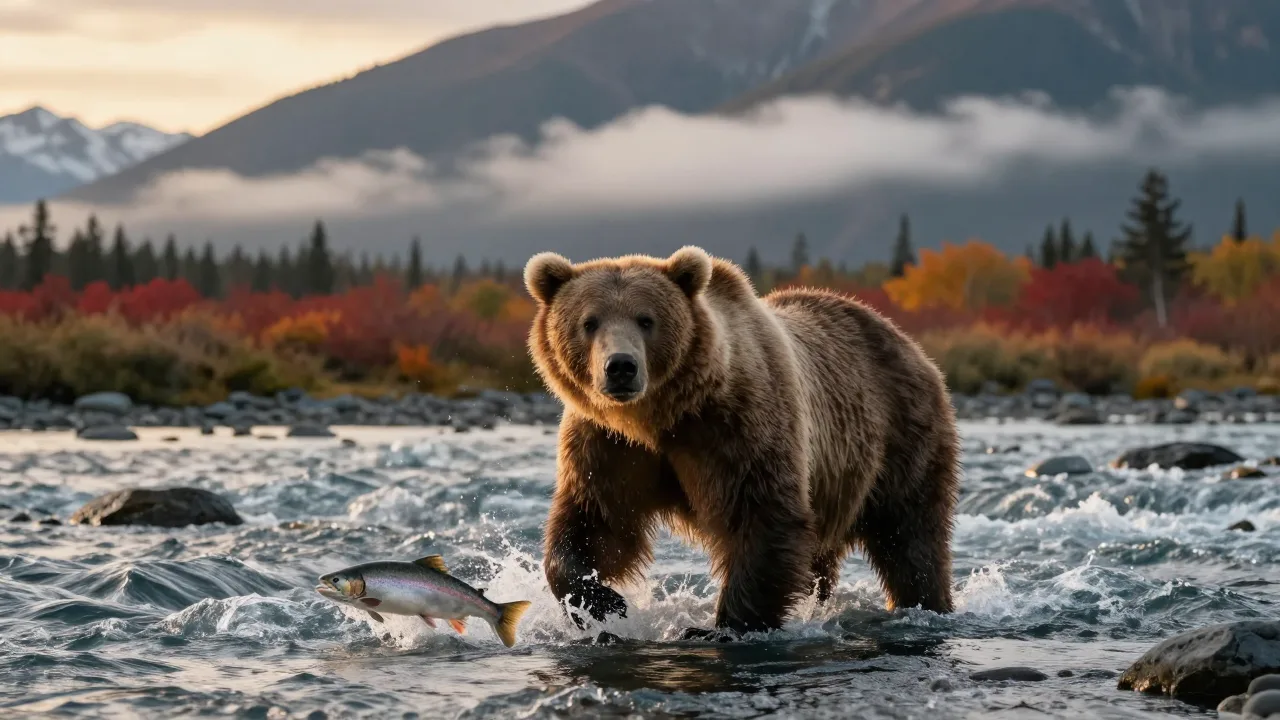
What is Fat Bear Week?
Fat Bear Week is an annual online tournament celebrating the brown bears of Katmai National Park and Preserve in Alaska. Viewers compare photographs of individual bears, usually taken during the salmon-rich late summer season, then vote in head-to-head matchups until one bear is named the champion. The premise is playful, but the biology is serious: a bear that has built substantial fat reserves has a better chance of surviving months of winter denning. If you have encountered the related search term Fat Bear, Fat Bear Week is the organized public event built around that same annual spectacle.
The contest has become popular because it makes a remote ecological story easy to follow. Each animal has visible differences in size, coat condition, feeding habits and personality, while the bracket creates the suspense of a sporting event. Unlike an ordinary beauty contest, the point is not that a bear looks attractive. It is that its weight gain reflects successful feeding before winter. That distinction matters when comparing it with Bear Week, which refers to a separate cultural event and is not connected to Katmai wildlife.
How Fat Bear Week voting works
Fat Bear Week normally uses a single-elimination bracket. Organizers introduce a field of bears, share images and background information, and invite the public to choose a winner in each pairing. The exact schedule, participating bears and voting platform can vary by year, so check the official Katmai announcements before assuming dates or rules. A matchup can be surprisingly close because voters often weigh more than sheer size. A bear's survival story, age, cubs, fishing skill and seasonal change can all influence a vote.
The format feels familiar to fans who follow weekly football rankings or tournament brackets, but there is no prize that turns the bears into performers. The animals continue living wild lives, and the public observation is secondary to park stewardship and education. At toughestblogger, the useful takeaway is simple: vote for the bear whose healthy pre-denning condition and seasonal story stand out to you, not for the animal that seems funniest in one photo.
Why bears need to get fat before winter
Brown bears at Katmai enter a period of hyperphagia before winter. In plain terms, they spend much of late summer and fall eating intensely, especially when salmon are available. The calories are stored as fat, which helps sustain the bear through denning. Adult females may also need enough reserves to support cubs, making late-season feeding especially important. A large bear is therefore not being judged by a human diet standard. In this setting, body fat is a survival resource.
Salmon runs are central to this story. Bears use several fishing strategies, including catching fish at waterfalls, chasing them in shallower water or scavenging remains. Their success depends on timing, access to productive spots, experience and changing river conditions. The broader food-web lesson resembles what people see when learning about a humpback whale's feeding ecology: abundant seasonal food can shape animal behavior, migration and survival.
How to follow Fat Bear Week responsibly
You do not need to travel to Alaska to enjoy the event. Photos, ranger information and livestream coverage can give viewers context without putting pressure on wildlife. If you visit bear country in person, follow park instructions, maintain distance, secure food and never try to recreate a wildlife photograph. A family hiking trip is more enjoyable when children understand that wildlife viewing means watching quietly from a safe distance, not approaching for a better image.
It is also worth separating wild-animal welfare from captive-animal entertainment. A zoo visitor guide may raise different questions about animal care, enclosure standards and visitor conduct. Fat Bear Week focuses on bears living in their natural habitat, where their changing size is tied to the seasonal food supply and the demands of winter.
What Fat Bear Week can teach about living near wildlife
The event can spark interest in bears far beyond Alaska. In places where people share landscapes with wildlife, prevention matters more than panic. Secure garbage, keep pet food indoors, clean grills and respect local guidance. Even home projects require thought: a My Shed Plans guide for building backyard storage can inspire useful storage ideas, but no ordinary shed should be assumed to be wildlife-proof without local advice and appropriate hardware.
Gardens also deserve a practical approach. A Medicinal Garden Kit for starting a home herb garden may be appealing for people interested in seasonal food and plants, yet gardeners in wildlife areas should learn which scents, fruit and food scraps can attract animals. The same principle applies to pet spaces. A well-designed enclosed outdoor cat area can help protect domestic cats while reducing unsupervised encounters with wildlife.
Why the event remains compelling
Fat Bear Week succeeds because it gives people a clear answer to a big natural question: what does survival look like before winter? It looks like a bear catching enough food, competing successfully and entering a den with the reserves it needs. The voting is lighthearted, but the underlying story is about habitat, salmon, climate conditions and adaptation. Readers interested in public science learning may also enjoy the broader role of institutions such as the Academy of Natural Sciences, where animal and environmental questions are explored through research and education.
When the next bracket opens, enjoy the dramatic before-and-after photos, read the notes about each bear and remember why the biggest bears are celebrated. In Fat Bear Week, fat is not a punchline. It is evidence that a wild animal has done the essential work of preparing for winter.
People also ask
What is Fat Bear Week?
Fat Bear Week is an annual public voting tournament featuring brown bears from Katmai National Park and Preserve in Alaska. It celebrates the bears that have successfully gained the fat reserves needed for winter.
Why are fat bears considered healthy?
For wild brown bears preparing to den through winter, stored body fat is an important energy reserve. Seasonal weight gain can indicate successful feeding during the salmon season.
How can I vote in Fat Bear Week?
Voting details and dates are announced by the event organizers each year. Check official Katmai National Park communications for the current bracket, rules and voting link.