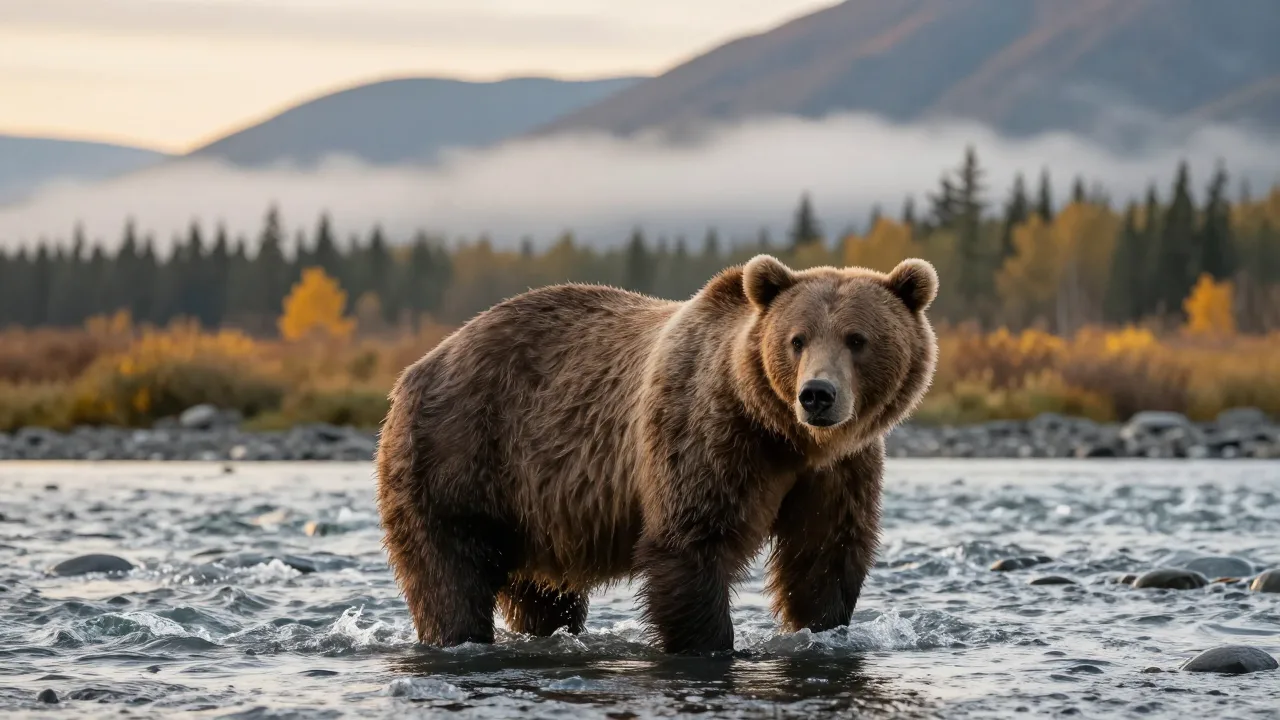
What does Fat Bear mean?
Fat Bear usually refers to the famously well-fed brown bears of Katmai National Park and Preserve in Alaska, especially during the annual online event known as Fat Bear Week. The phrase celebrates bears that have successfully spent summer eating salmon and building the body fat they need to survive hibernation. It is not a formal scientific category, and it is not a judgment about an animal that has somehow overdone dinner. In this context, a fat bear is usually a thriving bear.
That distinction matters. Brown bears in coastal Alaska can eat enormous quantities of salmon when the run is strong, then convert that seasonal abundance into energy reserves. A bear may look dramatically rounder by fall because it is preparing for months with little or no food. Anyone interested in how museums explain animal adaptation may also enjoy the natural-history perspective at the Academy of Natural Sciences. On toughestblogger, the short answer is simple: Fat Bear means a bear that is doing an exceptionally good job of surviving winter.
Why do bears get so big before winter?
Late summer and fall are a period of intense eating called hyperphagia. Bears become highly focused on food because their bodies are preparing for hibernation. At Katmai, salmon is the headline meal. Fish provide dense calories and fat, while a successful feeding season gives a bear a better chance of making it through winter and emerging in spring in good condition.
Size alone does not tell the whole story. A large adult male may look imposing, but adult females, younger bears and bears with injuries can also be impressive survivors. Their success depends on access to food, fishing skill, competition, health and timing. It is similar to how a fantasy football cheat sheet with current player context can be more useful than one isolated statistic. A photograph captures one moment, while a bear's season tells the larger story.
What is Fat Bear Week?
Fat Bear Week is an online, bracket-style public voting event associated with Katmai's bear-viewing program. Individual bears are matched against one another, and people vote for the bear they believe best represents the seasonal transformation from leaner summer animal to robust fall survivor. The contest typically uses photos and short background notes rather than placing bears on scales. Voters are judging visible change, condition and story, not receiving an official veterinary weight ranking.
The format is deliberately fun, but the conservation message is serious. Viewers learn that a bear with enough stored fat is more likely to endure hibernation, reproduce successfully or care for cubs. The voting format may feel familiar if you follow an AP Top 25 football ranking, but no bear is performing for points. The bears are wild animals, and the online attention is meant to encourage respect for their habitat.
Who are the famous Fat Bears?
Katmai bears are commonly identified by numbers, which helps researchers and viewers follow individual animals without treating them as pets. Some bears become recurring favorites because people have watched them fish for years, raise cubs or recover from difficult seasons. A widely known example is 747, a very large adult male whose nickname comes from his size. Other popular bears may become known for a distinctive scar, fishing spot, family history or remarkable year-to-year change.
The smartest way to follow a favorite is to remember that popularity is not proof of dominance or health. Bears face changing salmon runs, shifting weather, injuries and competition. Wildlife viewing should leave room for uncertainty, much like checking local weather conditions before an outdoor plan instead of assuming a forecast will stay fixed. A famous bear may be absent from a camera view simply because it has chosen another fishing area.
How can you watch Fat Bear Week responsibly?
Start with the official Katmai bear-viewing information when the event is announced, because dates, brackets and voting arrangements can change. Watching a live bear camera is often the safest option for both people and animals. If you visit bear country, follow park instructions, stay at the required distance, never feed wildlife and do not approach a bear for a photo. A phone can preserve the trip without turning the animal into a prop, and a practical guide to the iPhone 18 Pro for outdoor photography is more useful than risking a close encounter.
Bear awareness also applies outside Alaska. Campers and homeowners in bear habitat should secure food, garbage and pet food. Gardeners can think ahead with Self Sufficient Backyard plans for a wildlife-aware home garden, particularly where compost, fruit trees or unsecured feed may attract animals. Travelers should also monitor disruptions such as Washington State fires and changing outdoor access, which can affect wildlife habitat and recreation plans.
Fat Bear is really a conservation story
The appeal of Fat Bear Week comes from the before-and-after photographs, but its real value is that it makes ecology easy to see. Salmon feed bears. Bears move nutrients through the landscape. Healthy habitat supports both. Even a trip to a wildlife attraction should begin with questions about animal welfare and visitor conduct, as a Natural Bridge Zoo visitor guide can illustrate.
At home, pet owners in bear country should prevent avoidable encounters. Keeping cats in a secure outdoor cat enclosure and using a Brain Training for Dogs guide for stronger recall around wildlife can be sensible parts of a wider safety routine. Fat Bear is entertaining because the bears are enormous, but it remains compelling because every round body tells a story about food, habitat and a difficult winter ahead.
People also ask
What is a Fat Bear?
A Fat Bear is usually a brown bear that has gained substantial seasonal weight by eating salmon and other food before hibernation. The phrase is most associated with Katmai National Park and Preserve in Alaska.
Is Fat Bear Week about weighing bears?
No. The event uses public voting and visual comparisons of individual bears. It is a celebration of their seasonal success, not an official weigh-in.
Why is being fat healthy for a bear?
Bears need large energy reserves to survive hibernation. Fall body fat helps them endure months when they are not actively feeding.