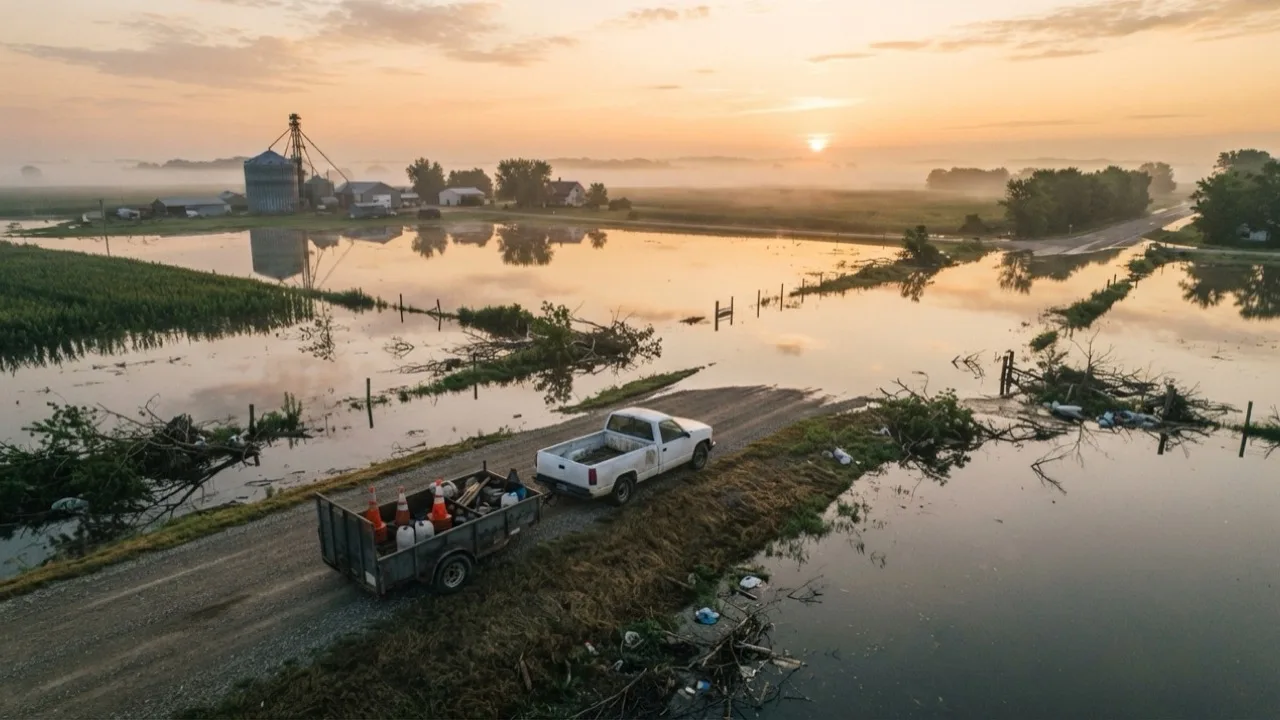
Indiana Disaster Relief: What Exists and Who Actually Pays
Indiana disaster relief runs on three layers, and knowing which layer you are in decides whether you get a grant, a loan, a volunteer crew or nothing at all. Layer one is local: your county emergency management agency, one in each of Indiana's 92 counties, opens shelters, runs damage assessments and posts road and travel status. Layer two is the state, coordinated by the Indiana Department of Homeland Security, which can move equipment, activate the National Guard and request federal support. Layer three is federal, and it unlocks only after the governor requests and the president approves a major disaster declaration. Households who follow storm coverage from meteorologists tracking a hurricane closing in on Houston, or who read independent forecast blogs like the Space City Weather team in Texas, often assume federal cash is automatic after a bad night. In Indiana, it usually is not.
The Three Calls to Make in the First 48 Hours
Dial 211 first. Indiana 211 is free, staffed by real people and connects you to food pantries, emergency lodging, utility assistance and local case managers. Second, call your insurance company and open a claim even if you believe the damage sits under your deductible, because federal aid will never duplicate what insurance should have covered. Third, if trees are down or your home took water, use the Crisis Cleanup hotline, which routes chainsaw teams, muck-out crews and roof tarping volunteers to your address at no charge. Those same volunteer networks deploy after wildfire evacuations out in Washington State, and demand peaks in week one. In hard-hit towns, churches and independent kitchens serve free hot meals the way a neighborhood restaurant turns its dining room over to the community.
Individual Assistance versus Public Assistance
If a declaration includes Individual Assistance, you register at disasterassistance.gov, through the FEMA app or by phone, normally within 60 days of the declaration. Grants can cover temporary housing, essential home repairs, a damaged primary vehicle and certain medical or funeral costs. They are capped, the cap is adjusted each federal fiscal year, and they are never designed to make you whole. Most Indiana declarations are Public Assistance only, which reimburses counties, cities, school corporations and some nonprofits for debris removal and infrastructure repair. Under Public Assistance, no money reaches your mailbox. Note also that detached structures, from a pole barn to a backyard bar shed bought at a warehouse club, are treated differently from the house itself, and contents claims move faster when you already have a photo inventory of anything valuable, including collections like graded NBA Topps Chrome trading cards.
Loans, Farm Losses and Small Business Recovery
The Small Business Administration is the workhorse of Indiana disaster relief. Its low-interest disaster loans go to homeowners and renters, not only businesses, and FEMA routinely refers applicants there first. Home repair limits run into six figures and business physical damage loans go higher, with caps the agency updates, so confirm the current figure the day you apply. Farmers should contact the county Farm Service Agency office about crop, livestock and fence loss programs. Owners rebuilding a storefront also have to rebuild a customer list, which is why guidance on distributing lead magnets to reach past customers belongs next to the insurance paperwork. If relatives abroad want to help, compare transfer fees carefully, the same way people do when they send money to Cuba at the lowest possible cost.
Documents to Gather Before You Call Anyone
Have your Social Security number, proof of occupancy or ownership, current bank details, the insurance policy number and dated damage photos ready. Medical and prescription records matter for replacement requests, including immunization paperwork of the kind people hunt for when checking how long a yellow fever vaccine stays valid. Students should notify their school or testing body early, because deadlines for things like the AAMC preview exam can sometimes be rescheduled with proof of a declared disaster. Keep every receipt for hotels, meals and temporary repairs.
Volunteers, Mutual Aid and Avoiding Scams
Neighborhood recovery increasingly organizes on chat servers, where coordinators track shifts and hand out roles the way gaming communities collect profile badges on Discord, and where cleanup channels look a lot like the busy Reddit threads fans use for Lanterns. Verify anyone knocking on your door: Indiana requires no statewide contractor license for many trades, so demand written estimates and never pay in full upfront. Report price gouging and fraud to the Indiana Attorney General. As we note across toughestblogger, cash donations to established relief organizations help far more than truckloads of used clothing.
Before the Next One
Build a kit with water, medications, batteries and shelf-stable protein, including options for restricted diets such as lactose-free cottage cheese and similar dairy swaps. Plan for animals: boarding fills instantly, and even facilities described in a roadside zoo visitor guide keep evacuation protocols on file. Know your flood risk, because coastal spots like the Marine Room in San Diego are not the only places where water reaches the windows. Expect cancellations, since organizers pull the plug on outdoor events exactly as festival crowds get evacuated at Lollapalooza. And in summer, treat heat as the emergency it is, the way endurance athletes do at the Badwater 135 desert race. During a long outage, a battery lamp and a tricky crossword clue beat draining your phone.
People also ask
Does Indiana disaster relief mean I automatically get FEMA money?
No. Federal cash grants to households only flow when a major disaster declaration specifically includes Individual Assistance. Many Indiana declarations are Public Assistance only, which reimburses local governments and certain nonprofits for debris removal and infrastructure repair rather than paying individuals.
How do I apply for federal disaster help in Indiana?
Register at disasterassistance.gov, through the FEMA mobile app or by phone once your county is included in a declaration with Individual Assistance. The registration window is normally about 60 days and can be extended. File your insurance claim first, since federal aid cannot duplicate insurance payments.
Who removes fallen trees and water damage for free?
Volunteer organizations reached through the Crisis Cleanup hotline and through Indiana voluntary organizations active in disaster provide chainsaw work, tarping and muck-out at no cost. They prioritize older adults, people with disabilities and uninsured households, and capacity is tightest in the first week.
Can renters get Indiana disaster relief?
Yes. Renters can qualify for federal grants covering personal property replacement and temporary housing, and they can apply for low-interest Small Business Administration disaster loans for contents. Proof of occupancy, such as a lease or utility bill, is usually required.
What if my insurance company denies the claim?
Request the denial in writing, since federal programs often require it. You can then file a complaint with the Indiana Department of Insurance, which reviews consumer disputes over claim handling, and you may still qualify for an SBA disaster loan while the dispute is open.
