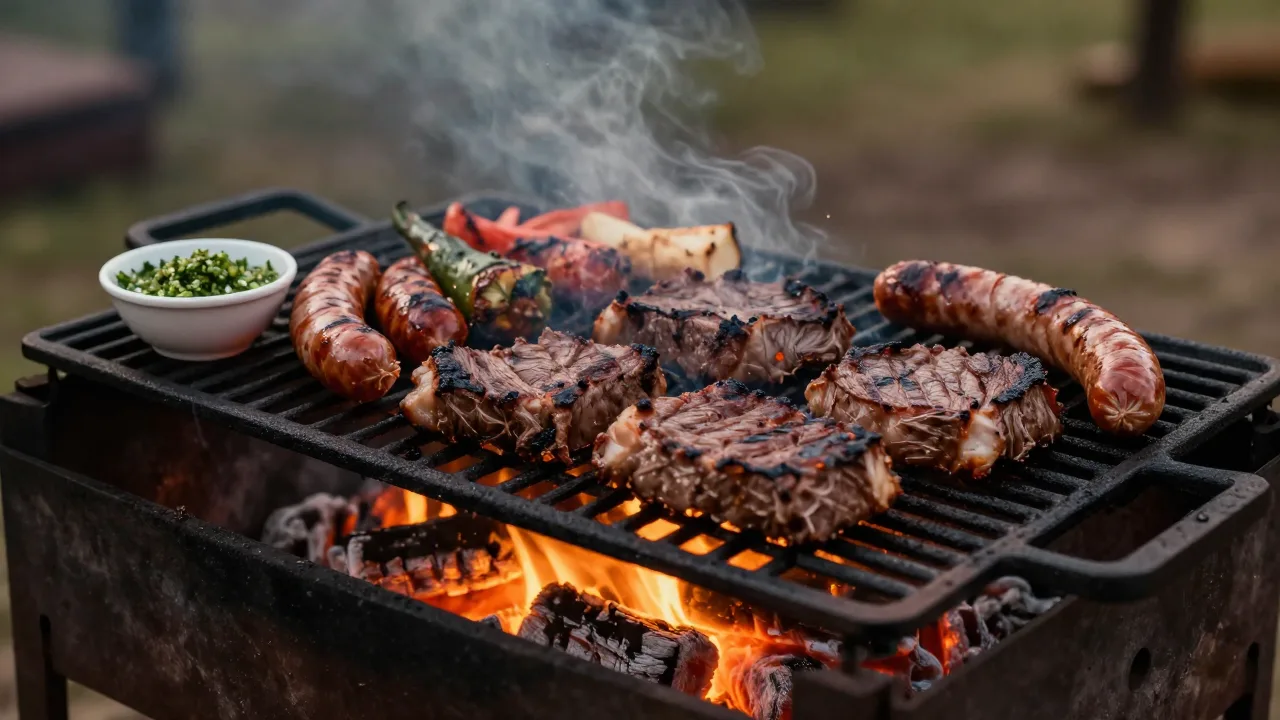
South American barbecue is not one recipe. It is a family of live-fire cooking traditions shaped by Argentina, Uruguay, Brazil, Chile, Colombia, Venezuela and other countries. The shared idea is simple: cook good ingredients slowly over wood or charcoal, season with restraint, and give people time to eat together. The best-known version is Argentine asado, but Brazilian churrasco, Uruguayan parrilla cooking and Colombian parrillada each have their own rhythm. At toughestblogger, the useful answer is this: South American barbecue is about controlling embers, choosing cuts that suit slow grilling, and serving food as a long social meal rather than a rushed backyard cookout.
What makes South American barbecue different?
Fire management comes first. A grill master usually creates a bed of embers at one side of the fire, then moves coals beneath the grate as needed. Flames can char food fast, but steady radiant heat cooks thick beef evenly. Argentine and Uruguayan grills often use a parrilla, an adjustable metal grate set above coals. Brazil commonly uses skewers, called espeto, which can be turned near a charcoal fire. The method is less about smoke-heavy sauces and more about beef, salt, patience and heat.
This is also why the shopping list stays short. Beef ribs, strip steak, flank steak, sausages, chicken and vegetables need careful timing more than a crowded spice rack. Someone planning a meat-free table can add grilled mushrooms, squash and peppers, or look at 3D meat alternatives for a barbecue menu without pretending they cook exactly like beef. Good bread matters too, whether that means crusty rolls or Oregon Trail sourdough for an outdoor meal.
Argentina and Uruguay: the parrilla tradition
Argentine asado and Uruguayan parrilla cooking are closely related, though local butchers and family habits change the plate. Beef is often the center of the meal. Common cuts include ribs, short ribs, skirt steak, flank steak and tender cuts cooked in larger pieces. Sausages often arrive first, followed by offal for diners who want it, then the larger cuts. Salt is frequently added close to grilling, leaving the flavor of the meat in charge.
Chimichurri is the condiment many visitors expect. It usually combines parsley, garlic, oregano, vinegar, oil and chile, although recipes vary from one household to the next. Treat it as a bright accompaniment, not a thick barbecue glaze. A sharp sauce, grilled bread and a simple salad cut through rich meat. For a practical vegetable addition, The Complete Plant-Based Recipe Cookbook for vegetable barbecue sides fits the table far better than a random sweet side dish.
Brazilian churrasco: skewers, salt and service
Brazilian churrasco is often recognized by its large skewers and tableside carving. Picanha, the beef cap with its layer of fat, is one of the cuts many people associate with Brazilian steakhouses. Cooks generally season it simply, then let the fat baste the meat as it turns. Chicken hearts, pork, sausages, cheese bread and grilled vegetables may also appear, depending on the region and the gathering.
Home cooks do not need restaurant equipment to borrow the idea. Use sturdy metal skewers or grill a whole picanha piece over indirect heat, then slice it across the grain. Keep one cooler area on the grill for finished food. Rice, farofa and a tomato salad make sense beside churrasco, while rice choices from Lundberg Family Farms can help when planning an easy grain side. Avoid soaking the meat in marinades that hide its flavor.
How Chilean, Colombian and Venezuelan grilling broaden the picture
South American barbecue changes as you move north and west. Chilean grilling often makes room for pork, chicken, sausages and seafood alongside beef, with pebre, a fresh chile, herb and tomato condiment, adding acidity. Colombian parrillada can include beef, pork, chicken, sausages, arepas and plantains. Venezuelan grilling also draws on regional beef traditions, sausages, corn and grilled sides. These meals are linked by fire and hospitality, not by a single approved menu.
That variety is useful when guests have different appetites. Grilled corn, onions, peppers, eggplant and cheese can all share the grate with meat. A bowl of taco soup for a cool-weather cookout can work as a starter, while chili lime chips for a casual snack table give people something to eat while the coals settle. Keep the main meal regional in spirit, not rigid in performance.
What to buy for a South American barbecue at home
| Item | Why it matters | Practical choice |
|---|---|---|
| Charcoal or hardwood | Creates stable embers | Use enough fuel for a long, low fire |
| Two-zone grill | Lets you sear and finish gently | Bank coals to one side |
| Thick-cut meat | Stays juicy over slower heat | Ribs, skirt steak, picanha or sausages |
| Sharp knife | Allows clean slicing across the grain | Use a carving knife and stable board |
| Fresh sauce | Adds acid after cooking | Chimichurri or pebre |
Spend money on fuel and ingredients before gadgets. A heavy grate, long tongs, an instant-read thermometer and a sharp knife cover most needs. For people searching for a dedicated option, Matsato Osuren Knife for cleanly trimming and slicing grilled meat is the kind of search phrase to assess against your own kitchen needs. Do not cut hot meat immediately. Resting gives juices time to settle, then slice against the grain and serve.
How to cook it without burning the outside
Start the fire early. Wait until charcoal turns pale and glowing before putting food over it. Begin thicker cuts away from the hottest center, then move them closer to the embers for color near the end. Sausages and vegetables can cook nearer the heat, but watch for flare-ups from dripping fat. If flames rise, move the food rather than spraying water on the fire.
Salt beef simply, then let guests add chimichurri or pebre at the table. This approach also keeps the meal flexible for people who prefer mild food. A pre-grill snack can be as simple as chipotle chips with a smoky kick, and leftover cooked meat can be chilled promptly for sandwiches the next day. The point is not to reproduce a restaurant. It is to build a relaxed meal around live fire, good timing and generous portions.
People also ask
What is South American barbecue called?
The names vary by country. Argentina and Uruguay commonly use asado or parrilla, Brazil uses churrasco, and Colombia often uses parrillada.
What meat is used for South American barbecue?
Beef is central in Argentina, Uruguay and Brazil, especially ribs, skirt steak, flank steak and picanha. Sausages, chicken, pork and offal may also be part of the meal.
What is the difference between asado and churrasco?
Asado usually refers to Argentine or Uruguayan slow grilling over embers on a parrilla. Churrasco is strongly associated with Brazilian skewers, simple seasoning and carved grilled meats.