What Oregon Trail Sourdough actually is
Oregon Trail Sourdough is not a brand of flour or a bakery product you buy off a shelf. It is a specific heirloom sourdough starter culture, a living mix of wild yeast and lactic bacteria, that has been passed hand to hand for generations and is best known through the name of Carl Griffith, an Oregon baker who gave it away by mail for years before his death. Family tradition dates the culture to an 1847 wagon crossing, though that origin story is oral history rather than laboratory proof, and it is fairer to treat it the way a museum treats a donated object with a good but unverified provenance, the same careful framing you see in a well run collection like the exhibits at the Academy of Natural Sciences and its natural history collections. What is documented is simpler and more interesting: the starter is still being distributed today, still free, and still by post.
How to get Oregon Trail Sourdough starter for free
The click winning answer is that you do not buy it. A volunteer network, generally referred to as Carl's Friends, continues to mail out dried portions of the culture to anyone who asks, at no charge beyond your own postage. The classic method is to send a self addressed stamped envelope to the current mailing address published by the volunteers, then wait. There is no order form, no subscription and no upsell. It is a genuinely old fashioned system, closer to a seed swap or a heritage planting program than to modern e commerce, and it has more in common with the way cuttings and grafts keep the Washington DC cherry trees alive across generations than with anything you would find in a grocery aisle.
What you get in the envelope
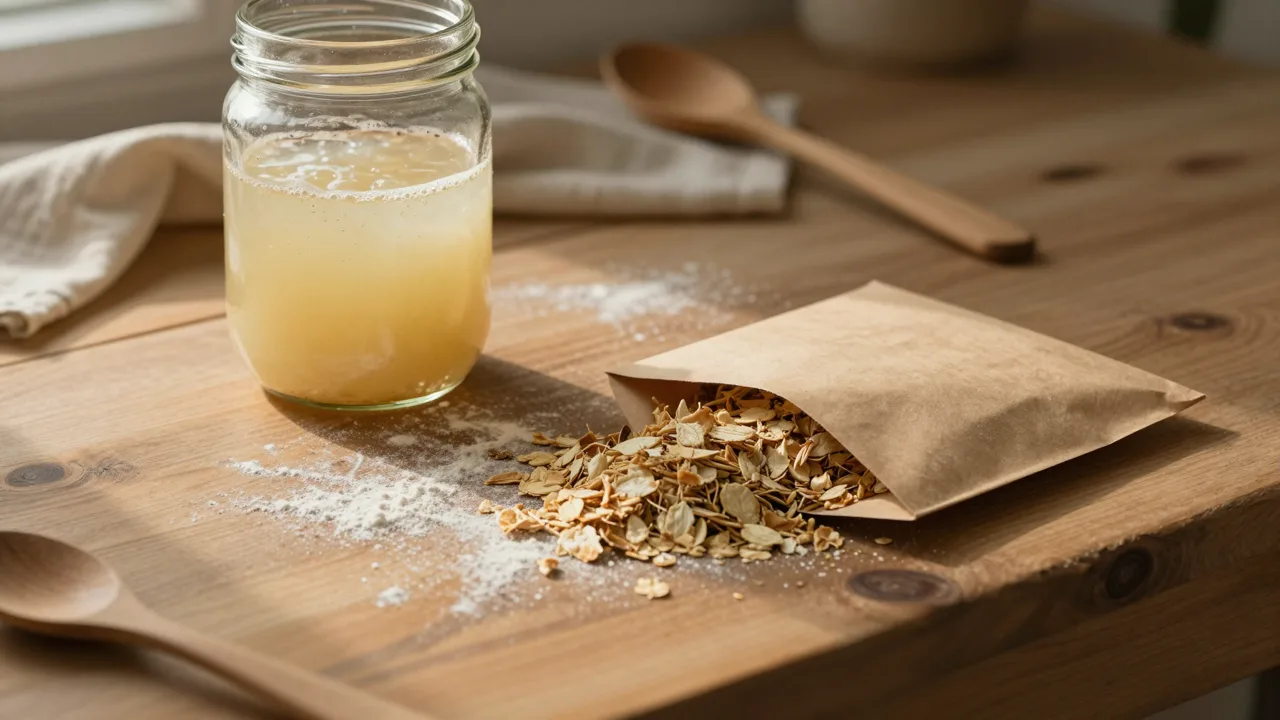
Expect very little to look at. Most requests come back as a small paper packet holding a teaspoon or so of dried, flaky, beige culture, sometimes with a short printed sheet of instructions. That is it. No jar, no flour, no scale. The value is in the culture itself, not the packaging, which surprises people used to the heavy retail presentation of even a simple pantry staple like a bag from Lundberg Family Farms and its rice growing operation. Delivery times vary because volunteers fill requests on their own schedule, so treat several weeks as normal rather than a problem.
Reviving the dried flakes, step by step
Put the flakes in a clean glass jar, add roughly equal weights of lukewarm water and plain unbleached flour, stir to a thick batter, cover loosely and leave it at normal room temperature. For the first day you may see nothing. Discard about half and feed again with fresh flour and water every twelve to twenty four hours. Somewhere between day three and day seven most people get a jar that doubles reliably and smells tangy and clean rather than sharp or solvent like. Patience matters more than technique here, which is the same lesson home bakers learn the hard way when they try to match the laminated layers of a shop counter item like the Costco mini pain au chocolat sold in bulk trays.
Once it is active, the culture is versatile. It leavens a plain country loaf, and the discard works in quick bakes such as pumpkin cream cheese muffins made at home or pancakes. Readers of toughestblogger who bake often tend to keep two jars, one on the counter for weekly use and one in the fridge as insurance.
Is it worth paying for a listing online?
You will find sellers offering Oregon Trail starter on marketplace sites for a few dollars up to a small premium. Nothing stops you, and paying can shorten the wait, but understand what you are buying: a dried culture that the volunteer network hands out at no cost. If speed matters, pay. If authenticity of the chain matters to you, request it directly. Either way, no starter is a health product, and slow fermented bread is still bread, which is worth remembering if you are the kind of reader who researches whether a supplement like Gluco6 can support healthy blood sugar levels when carbohydrates come back into your week, or who compares Java Burn 2.0 and how a coffee additive claims to support metabolism and daily energy before changing a morning routine. Read those claims critically, exactly as you would read an 1847 origin legend.
Keeping it alive long term
Feed weekly if refrigerated, daily if kept warm on the counter. Dry a spare batch on parchment and store the flakes in a sealed jar, which is the same insurance policy that let the culture survive decades of house moves. A stable, cool, dark shelf helps, and plenty of bakers end up building one, using the TedsWoodworking plan library to build kitchen shelving and storage from scratch rather than buying flat pack. That same build it yourself instinct shows up in projects covered under the buy it or build it comparison for home projects.
Share it once it thrives. Passing on a jar is the whole point, and it costs nothing beyond an envelope. It is the least commercial food story going, a long way from restaurant promotions like the DC Restaurant Week prix fixe menus, seasonal snack drops such as chili lime chips and where to find them in stores, limited runs like the new limited time Lay's flavor release, oceanfront dining rooms including the Marine Room in San Diego and its high tide seatings, small town bakeries such as Homemade Haven in Milton and its menu, or a slow morning at Wydaho Roasters Coffee House and its house roasts. For anyone tracking fermentation and dairy tolerance at the same time, the notes on cottage cheese without lactose and how it is made cover related ground.
People also ask
Is Oregon Trail sourdough starter really free?
Yes. A volunteer network has distributed dried portions of the culture at no charge for years. You typically send a self addressed stamped envelope to the published mailing address and pay only your own postage. Paid listings exist on marketplace sites, but they resell something that is given away free.
How long does it take to revive the dried starter?
Usually three to seven days. Mix the flakes with equal weights of lukewarm water and unbleached flour, then discard half and feed every twelve to twenty four hours. It is ready when it doubles reliably within a few hours and smells tangy rather than sharp.
Is the 1847 Oregon Trail origin story proven?
No. The 1847 wagon crossing date comes from family oral history, not documented laboratory evidence. What is verifiable is that the culture has been actively maintained and shared for decades. Treat the date as tradition rather than established fact.
How is it different from a starter I make myself?
A homemade starter captures whatever wild yeast is in your kitchen and flour. An heirloom culture arrives already established and often ferments predictably from the first week. Over months, your local conditions will shape both toward similar behaviour.