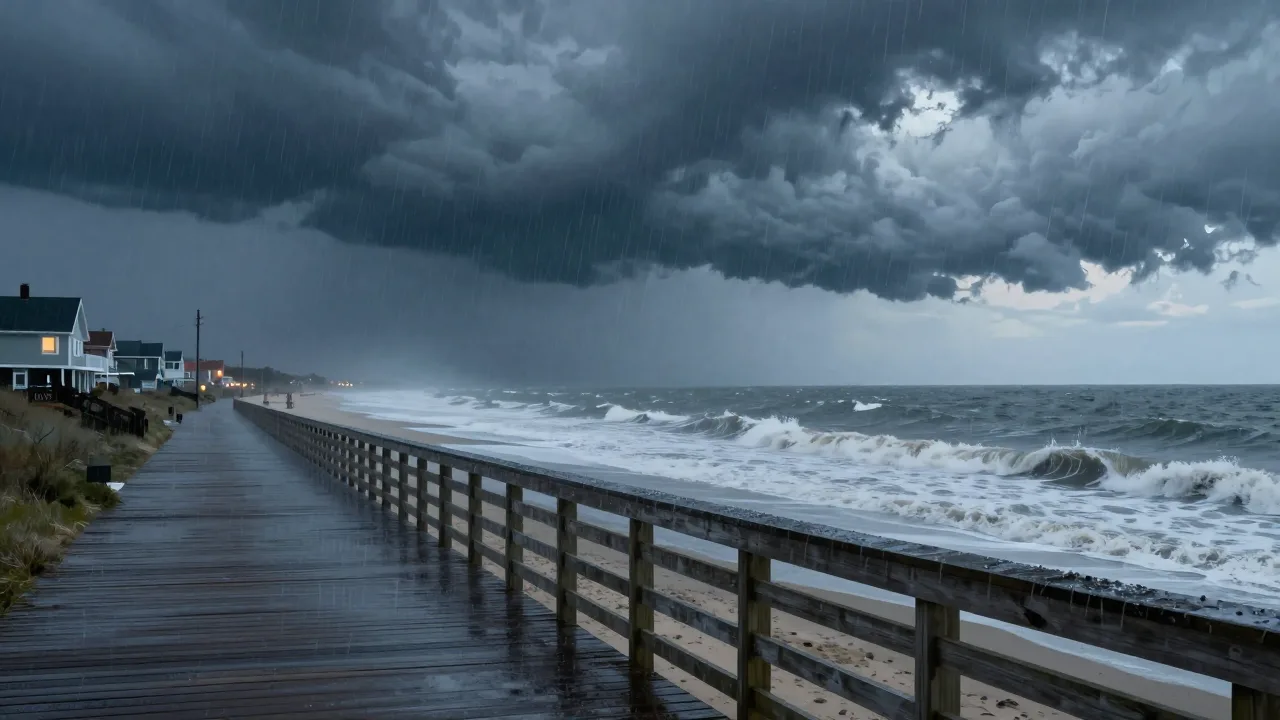
What does New Jersey Noreaster mean?
When people search New Jersey Noreaster, they are usually looking for a plain answer to three urgent questions: Is a coastal storm heading toward New Jersey, when will it affect my area, and what should I do? A nor'easter is a large low pressure system that develops or intensifies along the eastern United States. Its name comes from the strong northeasterly winds that can blow along the coast. For a fuller explanation of the weather term itself, see this guide to what a nor'easter is.
A New Jersey nor'easter can bring very different conditions from one county to another. Coastal communities may face beach erosion, tidal flooding and damaging wind. Inland areas may see heavy rain, wet snow, ice or power outages, depending on temperatures. The most useful response is not to assume every headline means the same thing. Check the forecast for your exact town, the timing of high tide, expected wind gusts and any local emergency alerts.
Why nor'easters can hit New Jersey hard
New Jersey sits between the Atlantic Ocean and densely populated inland corridors, so a storm can disrupt shore roads, rail travel, schools and local businesses in a short period. On the coast, wind pushes water toward land while astronomical high tides can make nuisance flooding substantially worse. Heavy rain can also overwhelm low lying roads and drainage systems. Coastal storm patterns differ from a tropical system, but lessons from hurricane preparedness and flooding risk still apply: water depth and road conditions can change faster than drivers expect.
Wind is another major concern. Gusts can bring down branches, damage loose outdoor items and interrupt electricity service. That is why emergency planners recommend treating a wind warning as a practical household task, not merely a weather update. Bring in patio furniture, secure bins, charge essential devices and avoid parking beneath weak trees or power lines. A storm is also a poor time to depend on unverified social media clips. As coverage around flooding videos and online verification shows, dramatic footage can be old, miscaptioned or from another location.
How to follow a New Jersey noreaster forecast
Start with official National Weather Service forecasts, county emergency management notices and local utility updates. Look for the difference between a watch, which means conditions are possible, and a warning, which means hazardous weather is expected or occurring. Forecast confidence is usually lower several days out and improves as the system nears. The key details are the start time, peak wind period, rainfall or snow totals, coastal flood category and the expected end of the threat.
Weather coverage is often easier to understand when it explains impacts rather than just totals. Readers comparing local forecast coverage can also see how weather reporting focused on practical impacts frames rain, wind and travel decisions. For New Jersey, do not use a forecast for Newark, Atlantic City or Cape May as a substitute for your own neighborhood. Coastal elevation, distance from the ocean and local drainage all matter.
A practical checklist for homes, cars and pets
Before conditions deteriorate, charge phones and backup batteries, keep flashlights available, refill prescribed medications if possible and keep several days of water and shelf stable food. If you use a generator, operate it outdoors and well away from doors, windows and vents. Carbon monoxide from generators is dangerous and cannot be smelled. Anyone researching a Power Grid Generator home backup power planning guide should still use certified equipment and follow local fire and electrical safety rules.
For battery powered lights, weather radios and other emergency gear, inspect equipment well before the storm arrives. A Battery Reconditioning Course for maintaining stored emergency batteries may be relevant to preparedness research, but damaged, swollen or leaking batteries should be replaced, never improvised or repaired. Households that want a broader resilience project may also explore a Self Sufficient Backyard plan for home emergency readiness, while keeping storm plans realistic for their space and local regulations.
Move vehicles away from flood prone streets if officials advise it, but never drive through standing water. Keep pets indoors and make sure leashes, carriers, food and medication are ready in case you must leave quickly. Owners of outdoor enclosures can use this catio safety guide for protected pets as a reminder to inspect latches, roof panels and nearby loose objects before high winds.
Travel, work and the day after the storm
If a noreaster is expected during a commute, build in extra time or consider postponing nonessential trips. Reduced visibility, ponding water and fallen branches can make even a short drive risky. Families with outdoor plans should apply the same caution discussed in this family hiking safety overview: weather conditions, route access and a safe return plan matter more than keeping an itinerary.
After the storm, avoid downed wires, report hazards to the appropriate utility or local authority and photograph visible property damage for insurance records. Do not enter a flooded basement until it is safe to do so. Flood risk is not limited to coastal New Jersey, as reports on how flooding can turn dangerous quickly illustrate. toughestblogger recommends using the storm search as a prompt to prepare calmly, follow verified local guidance and avoid treating a viral forecast post as an official warning.
The bottom line
A New Jersey noreaster is not one fixed event, but a coastal storm pattern that can produce wind, flooding, heavy precipitation and travel disruption. The right response depends on your location and the latest official forecast. Prepare early, avoid unnecessary travel during the worst conditions and give yourself time to assess roads, power and property safely after the system passes.
People also ask
What is a New Jersey noreaster?
It is a coastal low pressure storm that can bring strong northeasterly winds, heavy rain or snow, coastal flooding and rough surf to New Jersey.
When is nor'easter season in New Jersey?
Nor'easters are most common from fall through spring, although coastal storms can occur at other times of year.
What should I do before a nor'easter?
Monitor official local forecasts, secure outdoor items, charge devices, prepare emergency supplies and avoid travel when warnings or dangerous road conditions are expected.