What happened in the San Jose plane crash?
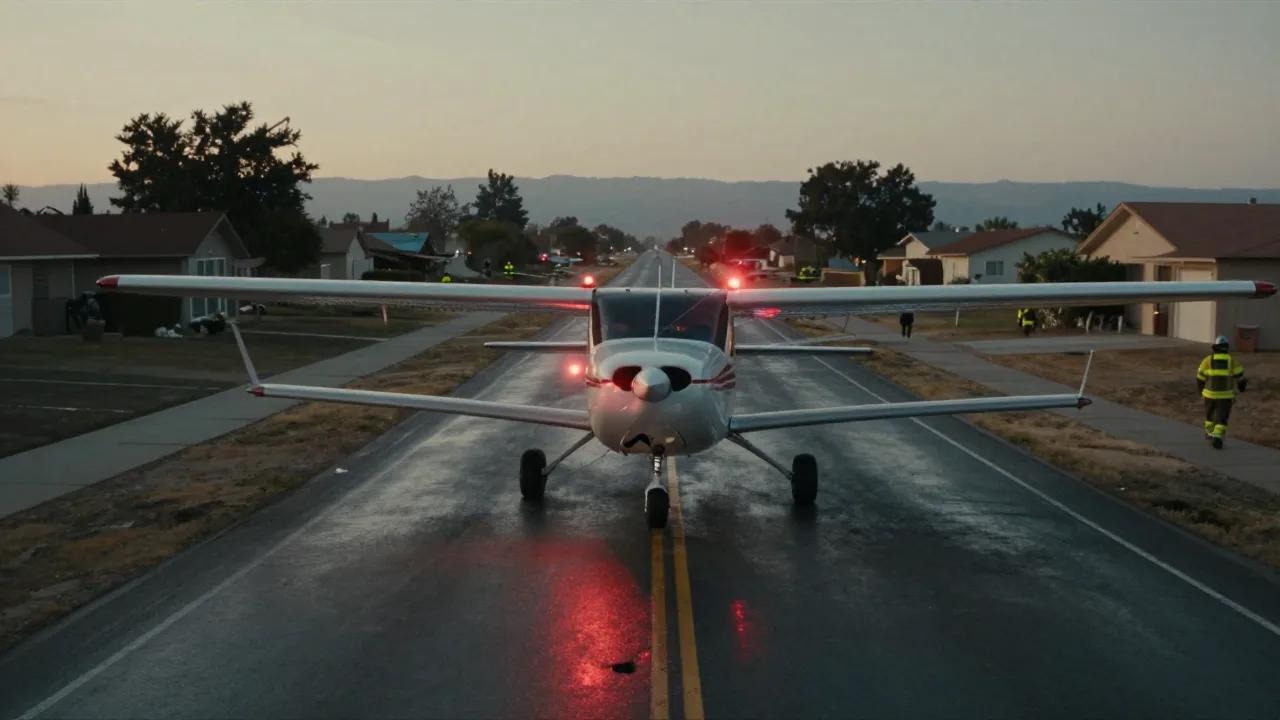
A small single-engine airplane crashed onto Capitol Expressway near Excalibur Drive in San Jose, California, shortly after 3 p.m. on Saturday, October 17, 2026. Two adults and one child were aboard. All three were taken to a hospital with injuries reported as non-life-threatening. No people in vehicles or on the street were reported hurt. The most important point for anyone searching Plane Crash San Jose is that this was a survivable roadway crash involving a light aircraft, not a commercial-airliner disaster or a crash at San Jose Mineta International Airport.
Fire crews contained a minor fuel spill and cleared the wreckage from the intersection. The aircraft was reported as a 1968 Cessna 177A Cardinal. Public FAA registration information identified it as connected to Flying Twenty Inc., a nonprofit flight club associated with San Jose State University students, alumni and faculty. Early details can change as evidence is reviewed, so claims about a definitive mechanical failure or pilot error should be treated cautiously. toughestblogger follows the same basic rule readers should use with early reports, separate what authorities have confirmed from what remains under investigation.
Where did the plane come down?
The crash happened at or near the Capitol Expressway and Excalibur Drive intersection, in southeast San Jose. That location matters because video can make a roadway crash look like an airport event. It was not. The plane came down on a public street, and authorities said it avoided striking vehicles on the ground. That distinction is useful when comparing this event with reports of a local traffic accident that closes roads and disrupts a city or a transportation crash with a separate emergency response.
Roadway aircraft crashes create two immediate hazards beyond injuries: fuel and traffic. First responders must assess whether leaking aviation fuel could ignite, then secure the area and remove the aircraft without creating a second emergency. Drivers should never stop to film, walk toward debris, or rely on social posts for a reopening time. Official police, fire department and transportation alerts are the useful sources during the first hours.
What is known about the passengers and injuries?
Authorities said the plane carried two adults and a child. Their names were not part of the initial public reporting, and there is no reason to speculate about their identities or medical care. The available information is that they were transported to hospital as a precaution and their injuries were not life-threatening. In an event involving a small aircraft, that outcome is significant, but it does not make the crash minor. Even when people can leave an aircraft, medical teams must check for injuries that are not immediately obvious.
It is also important not to turn a developing local incident into an unrelated aviation narrative. A hijacked plane emergency, for example, is investigated under very different circumstances. Historical searches about how many planes were hijacked on 9/11 concern a separate event and should not be used to interpret this San Jose crash.
What caused the crash?
As of October 21, investigators had not announced a final cause. That is normal. Aviation investigations take time because investigators may review the aircraft, engine components, maintenance history, pilot information, weather, air traffic records and witness accounts. A preliminary report can establish a timeline, but it is not a final finding of blame.
Short clips can be valuable evidence, yet they can also create false certainty. Readers comparing dramatic footage with other incidents should understand how plane-impact video can raise verification questions. A viral angle, a guessed engine problem or a claimed emergency landing route is not proof unless investigators confirm it.
Why was the crash so widely shared?
The location made the incident unusually visible. A plane on a busy city roadway is rare, startling and easy to capture on phones. The fact that no ground vehicles were hit added another detail that spread quickly online. San Jose also had a separate small-plane incident at Reid-Hillview Airport the previous day, involving a landing-gear problem and no reported injuries, which likely added to public attention.
That does not mean the two events had a common cause. Two incidents close together can produce a powerful impression, but aviation safety investigators assess each flight on its own evidence. The same care is useful in other local emergencies, whether following a fast-moving fire response, updates after wildfire-related evacuation notices, or weather disruption during a Southern California tropical storm.
What should nearby residents do after an aircraft crash?
Stay away from the scene, follow detours, and do not touch debris. Aircraft parts, sharp metal, fuel and damaged electrical equipment can all be dangerous. If authorities ask residents or drivers to avoid an area, that request protects both the public and the evidence investigators need. People who saw the crash may be asked to provide information, but they should give it directly to authorities rather than posting unverified conclusions online.
For households, the practical lesson is ordinary preparedness, not panic. Keep emergency contacts, basic supplies, medications and a way to receive official alerts. People considering broader home readiness may look at The Doctor’s Book of Survival Home Remedies for a household emergency-kit guide or Ultimate Off-Grid Generator for household backup-power planning, while remembering that an accident scene always requires professional emergency services.
What happens next?
The next meaningful updates will come from investigating agencies and local officials, not rumor accounts. Investigators will determine what evidence supports the sequence of events and whether any safety findings are warranted. Until then, the clearest answer to Plane Crash San Jose is straightforward: a small aircraft crashed on Capitol Expressway, all three people aboard survived with non-life-threatening injuries, nobody on the ground was reported injured, and the cause remains under investigation. For readers interested in how communities recover after emergencies, disaster relief and local recovery efforts show why accurate information matters long after the first headlines fade.
People also ask
Did anyone die in the San Jose plane crash?
No deaths were reported. Two adults and one child aboard the small plane were taken to hospital with non-life-threatening injuries.
Where did the plane crash in San Jose?
It came down near the intersection of Capitol Expressway and Excalibur Drive in southeast San Jose.
What caused the San Jose plane crash?
The cause had not been officially determined as of October 21, 2026. Aviation investigators are reviewing the incident.