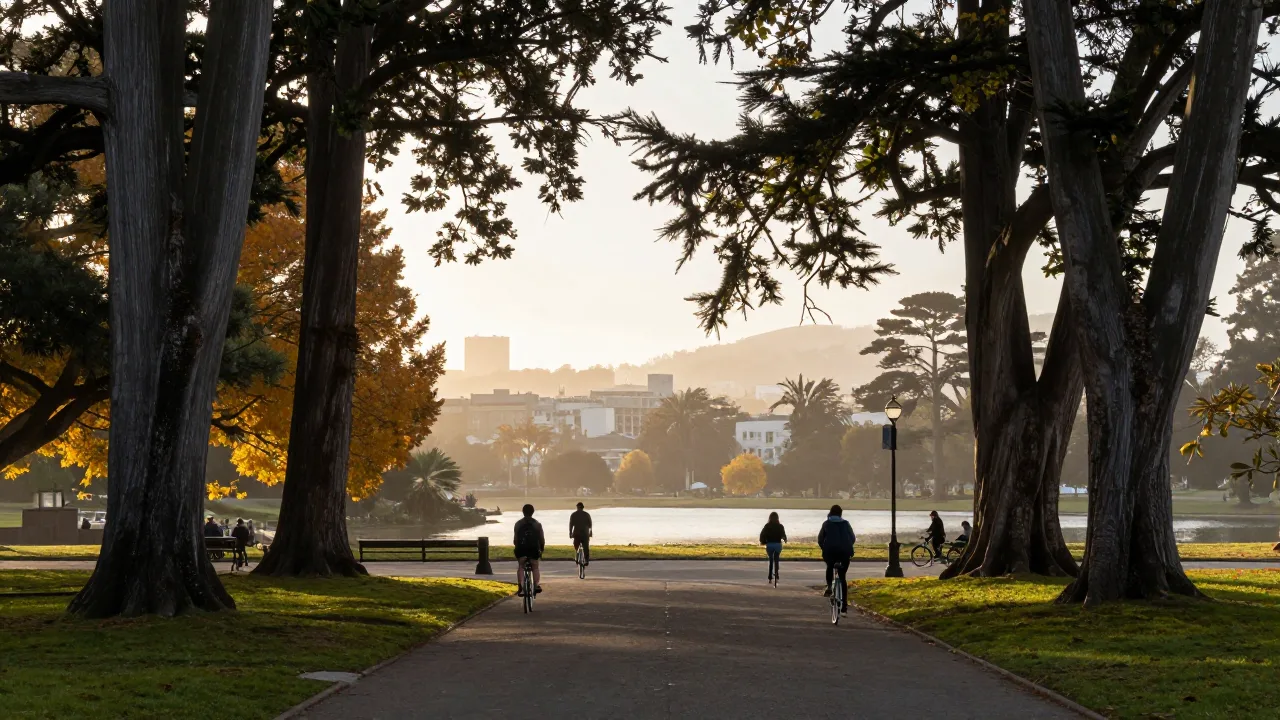
What is Golden Gate Park?
Golden Gate Park is San Francisco's large west-side urban park, stretching roughly three miles from the Haight-Ashbury area toward Ocean Beach. It covers more than 1,000 acres, making it far bigger than many first-time visitors expect. This is not a small downtown green space you cross in 20 minutes. It is a landscape of meadows, wooded paths, gardens, lakes, sports areas and cultural institutions. For travelers comparing major city green spaces, our guide to MacArthur Park and its Los Angeles setting shows how differently public parks can shape a neighborhood.
The park was created in the late 19th century on land that was largely windswept sand dunes. Landscape architect William Hammond Hall and park superintendent John McLaren were central to turning that difficult terrain into the planted park visitors know today. Golden Gate Park remains a place for everyday exercise, family outings, concerts, museum visits and quiet walks, all in the same afternoon.
Best things to see in Golden Gate Park
If you only have a few hours, start around the Music Concourse, the central plaza shared by the de Young Museum and the California Academy of Sciences. The de Young is known for its American art collections and observation tower, while the Academy combines an aquarium, planetarium, rainforest exhibit and natural-history museum. Visitors who enjoy science collections may also like this overview of the Academy of Natural Sciences and what it offers.
Nearby, the Japanese Tea Garden is one of the park's most photographed attractions. Its paths, ornamental plantings, bridges and water features make it a strong choice for a calmer visit, though entry policies and hours can vary by season. The Conservatory of Flowers is another essential stop, especially for anyone interested in tropical plants and historic glasshouse architecture. Garden lovers considering projects at home can explore a medicinal garden kit for starting a useful home herb plot, then use the park's plant displays as inspiration rather than a strict planting blueprint.
Outdoor activities, lakes and open space
Golden Gate Park rewards visitors who leave time to wander. Stow Lake, now officially called Blue Heron Lake, is a popular place to watch water birds, walk around the shoreline or rent a boat when services are operating. Strawberry Hill rises from the lake and offers a more secluded-feeling route than the busy museum area. Birdwatchers can also look toward the park's ponds and open lawns, much as coastal wildlife fans may enjoy learning about the pelican's habits and habitat.
For a longer active day, follow the paved routes used by walkers, runners and cyclists, or bring a picnic to one of the larger lawns. The park has play areas, athletic facilities, a disc golf course and broad spaces for informal recreation. Families planning an outdoor trip may find useful ideas in this practical guide to hiking with a family. Bring layers, water and sun protection, because San Francisco weather can change quickly even when the morning begins bright.
How to plan a Golden Gate Park visit
The best entry point depends on what you want to do. The eastern side is convenient for the de Young, California Academy of Sciences, Japanese Tea Garden and Conservatory of Flowers. The western side is better for reaching the beach, windmills and the park's more open coastal atmosphere. Public transit, biking, walking and rideshare can all work, while driving requires extra patience because parking availability varies by area and event schedule.
Before setting out, check the official websites of museums, gardens and scheduled events for current hours, ticket rules, accessibility information and temporary closures. That detail matters more than a generic list of attractions. The same principle applies when planning around crowds at an event, whether it is a local festival or something on the scale of Lollapalooza festival planning. Arriving early is often the simplest way to experience the park at a slower pace.
Food, weather and a realistic itinerary
You can build a satisfying visit around a museum, garden and lake walk, without trying to see every acre. A half-day works well for the central attractions. A full day gives you time to walk farther west, stop for a picnic and explore quieter trails. Pack snacks if you want flexibility, or plan a meal outside the park after your visit. Readers looking for simple comfort-food inspiration can browse a warming taco soup recipe for cool evenings or a guide to seasonal pumpkin cream cheese muffins for a portable treat.
Fog is part of the experience, particularly near the western end, and it can make the trees, lawns and paths feel unexpectedly dramatic. Comfortable shoes are more important than a tightly scheduled plan. toughestblogger recommends choosing two or three priorities, then leaving room for whatever catches your attention, whether that is a garden bench, a hidden trail or a view across the water.
Why Golden Gate Park is worth the time
Golden Gate Park is valuable because it works at several speeds. It can be a quick museum stop, an all-day family outing, a cycling route or a free place to reset between busy San Francisco neighborhoods. Its mix of designed gardens and less formal woodland areas gives it a character that is distinct from a standard city square. If you enjoy unusual landscapes, compare its built environment with the imaginative look of a 3D rug design trend or the strange natural drama explored in our piece on the Hanging Gardens of Babylon.
For most visitors, the best answer to Golden Gate Park is simple: go with a destination in mind, but treat the journey between attractions as part of the visit. That is where the park's scale, history and everyday local life become most visible.
People also ask
Is Golden Gate Park free to enter?
The park itself is generally free to enter. Some attractions inside it, including museums and certain gardens, may charge admission or require timed entry.
How long does it take to visit Golden Gate Park?
Allow at least two to three hours for a focused visit to the central attractions. A full day is better if you want to include museums, gardens, lakes and the western end near Ocean Beach.
What is the best part of Golden Gate Park?
The Music Concourse area is the best first stop for many visitors because it is close to the de Young, California Academy of Sciences, Japanese Tea Garden and Conservatory of Flowers.