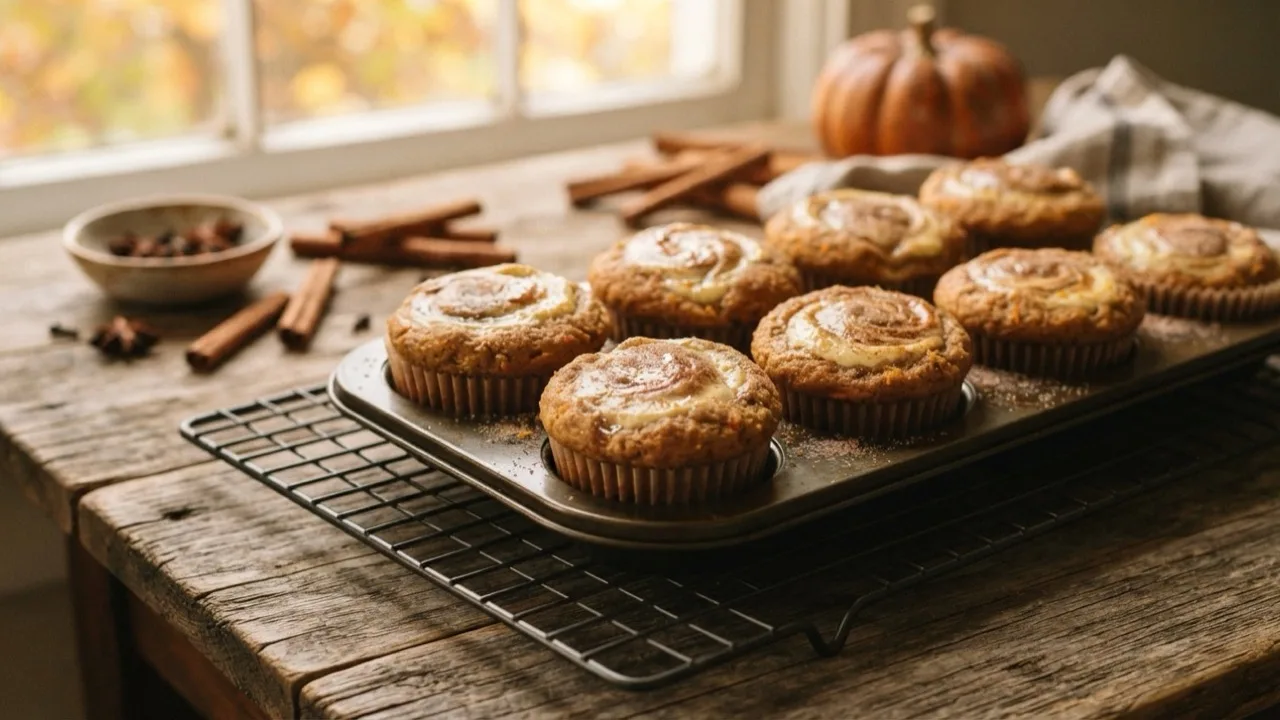
What a pumpkin cream cheese muffin actually is
Strip away the marketing and you get two things baked together. First, a soft, oil based pumpkin muffin spiced with cinnamon, ginger, nutmeg and clove, closer to quick bread than cake, which is why it stays moist for three or four days. Second, a sweetened cream cheese filling that is essentially a tiny cheesecake batter: block cream cheese beaten with sugar, an egg yolk and vanilla, either piped into the centre or swirled across the top. That pairing is why the search volume spikes every single autumn, alongside the other seasonal food drops that appear and vanish within weeks, the way a limited time chip flavour or a new snack cake chocolate collaboration does.
The filling problem nobody warns you about
Why it sinks
The number one complaint is a cream cheese centre that disappears into the crumb or leaks out of the side. Two causes: the filling is too loose, and the batter is too thin. Spreadable tub cream cheese carries extra water and will not hold. Neither will a filling softened in the microwave until it pours.
The fix that works
Use full fat block cream cheese at cool room temperature, beat in roughly a quarter cup of sugar and one egg yolk per eight ounces, then chill the mixture for twenty minutes so it pipes like thick frosting. Fill each liner two thirds with batter, add a heaped teaspoon of filling, then cap it with a thin layer of batter. If your kitchen is warm and sticky, the sort of air that Gulf Coast weather watchers talk about all season, chill the filled tin for ten minutes before it goes in the oven.
What a batch costs and what you get
A standard batch makes twelve muffins from about one cup of pumpkin puree (half a fifteen ounce can), eight ounces of cream cheese, two eggs, oil, sugar, flour and spices. In most American grocery stores that lands somewhere around eight to twelve dollars for the whole tray, which works out well under a dollar and a half per muffin, before you count the pantry staples you already own. Buying the can and the cream cheese in bulk on a warehouse club run, the same trip where people price up a backyard bar shed, drops that further. Nutritionally these are a treat, not fuel, so if you are eating to a plan set by a strength and conditioning coach, treat one muffin as dessert rather than a protein snack. Lactose sensitive bakers get a decent result from a lactose free block cheese, the same shelf logic as choosing cottage cheese without the lactose.
Buying instead of baking
Coffee chains, supermarket in store bakeries and independents all run a version from roughly late August through November, and availability is store by store rather than national. Expect three to five dollars for a single bakery muffin, more at a sit down spot. An independent roaster and coffee house will often bake a better one than a chain, and pastry cases at places like a chef led neighbourhood restaurant sometimes carry them as a counter item. Autumn dining promotions such as a city wide restaurant week occasionally push pumpkin cheesecake onto set menus too, and a coastal dining room like the oceanfront room in San Diego will plate the same flavours as a dessert course. If you want them on a specific date, phone ahead. Seasonal bakes sell out by mid morning.
Method, start to finish
Heat the oven to 375F, line twelve wells, whisk the dry ingredients, whisk pumpkin with oil, sugar, eggs and vanilla, then fold the two together until barely combined. Overmixing gives you tough, tunnelled muffins. Layer, fill, cap, then bake eighteen to twenty two minutes until a skewer in the cake part (not the filling) comes out clean. The high starting heat is what gives the domed bakery top. Here at toughestblogger we would rather you owned an oven thermometer than a stand mixer, because most home ovens run twenty degrees off.
Storing, freezing and eating them later
Because of the dairy centre these are not counter muffins. Cool completely, then refrigerate in a sealed container for up to five days, or freeze individually wrapped for three months. Thirty seconds in the microwave from frozen brings one back for a school morning while the kids are still logging into their online reading and maths practice. They travel well in a cool bag for a family day out, including a roadside zoo visit, and they are the obvious thing to bake before a big autumn shopping trip, the kind where you are already hunting a Halloween costume from the big box aisle. Plate them on a styled autumn table with something like a seasonal home decor drop, or just eat two on the sofa during the new ballroom competition season. Recipe bloggers, note that a printable spice chart is a strong hook if you are working out how to distribute a lead magnet this autumn.
People also ask
Why does my cream cheese filling sink into the muffin?
The filling is too soft or the batter is too thin. Use full fat block cream cheese, add an egg yolk and sugar, chill the mixture until it is pipeable, and cap the filling with a thin layer of batter before baking.
Can I use pumpkin pie filling instead of pumpkin puree?
Not without adjusting. Pie filling is already sweetened and spiced, so you would need to cut the sugar and the spice blend significantly. Plain puree gives you control and a firmer crumb.
Do pumpkin cream cheese muffins need refrigerating?
Yes. The dairy centre means they should be cooled fully then kept in a sealed container in the fridge for up to five days, or frozen individually wrapped for around three months.
How much does a bakery pumpkin cream cheese muffin cost?
Prices vary by location, but a single muffin at a coffee shop or grocery bakery typically runs a few dollars, while a twelve muffin homemade batch usually costs well under a dollar and a half per muffin.
When are they available in stores?
Availability is seasonal and set store by store, generally from late summer through late autumn. Call ahead if you need them on a specific day, because seasonal bakes often sell out before lunchtime.
