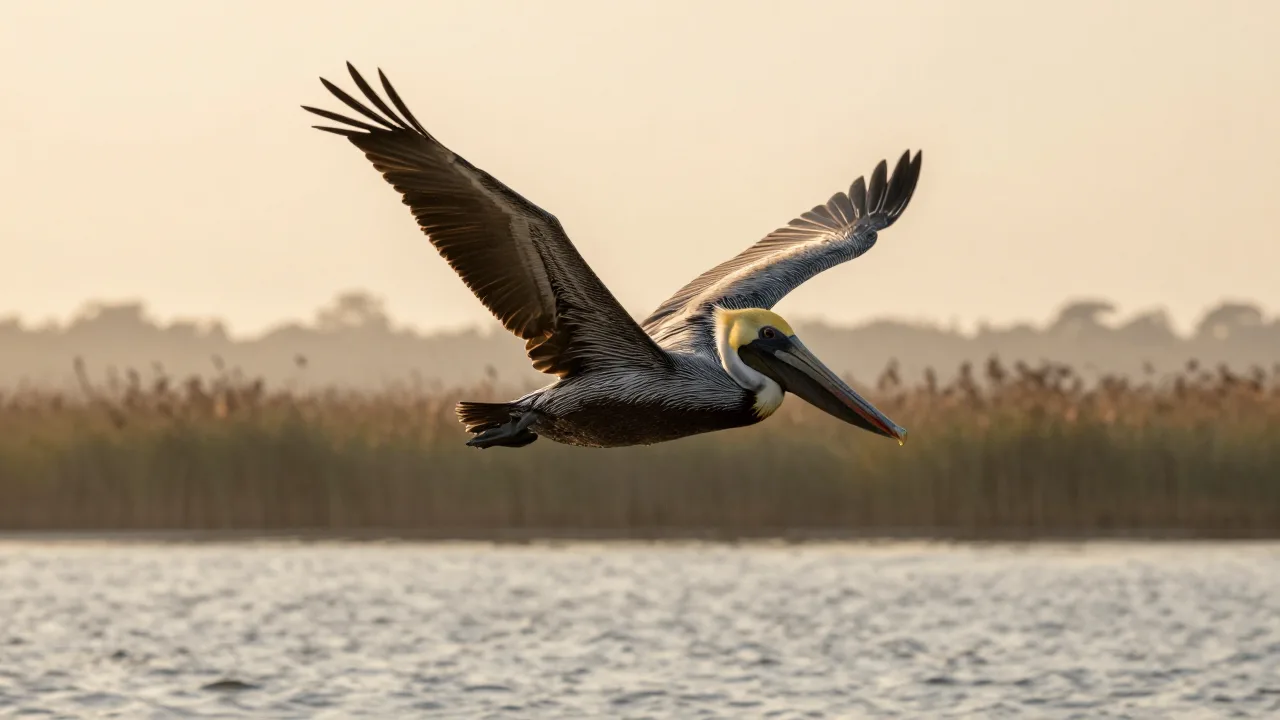
What is a pelican?
A pelican is a large waterbird in the family Pelecanidae, best known for its long bill and elastic throat pouch. That pouch helps the bird catch and drain water from fish, not store food for long periods. Pelicans live around coasts, estuaries, rivers, lakes, and wetlands, so a sighting near open water is usually normal. They are often mistaken for oversized gulls at a distance, but their broad wings, heavy body, and unmistakable bill make them easier to identify once they are close. For a deeper look at natural history collections and animal science, the Academy of Natural Sciences is a useful starting point. Pelicans are part of the same wider world of water-dependent wildlife that also draws interest in the humpback whale and the annual fascination around a fat bear.
Why would a pelican be near you?
Most of the time, a pelican is there because food and a safe resting place are nearby. Fish-rich shallows, docks, sandbars, jetties, and calm lakes give pelicans room to feed or loaf between flights. A bird standing still with its head tucked may simply be resting. A group circling or diving can mean fish have gathered below the surface. Weather also changes where birds settle. Heavy rain, wind, high surf, flooding, and changing water levels can push birds toward sheltered areas, the same reason local conditions matter during events such as Zion National Park flooding, a Houston hurricane, or major Washington State fires. A pelican in an unusual place is not automatically injured, but it deserves calm observation from a distance.
Are pelicans dangerous to people or pets?
Pelicans are wild birds, and their bills are powerful enough to injure someone who crowds, grabs, or tries to feed them. Still, they do not normally seek conflict with people. Give a pelican space, keep dogs leashed, and never let children approach a resting or nesting bird. If a bird has fishing line around its bill or wing, appears unable to stand, has a visible wound, or cannot fly away when approached, contact a licensed wildlife rehabilitator or local animal authority. Regional organizations such as the San Diego Humane Society can illustrate the kind of professional help wildlife cases may require. At home, a secure catio that keeps cats safely contained also reduces risks to birds and other nearby wildlife.
What do pelicans eat, and should you feed one?
Pelicans primarily eat fish. Their exact diet depends on the species and habitat, but they generally catch small to medium fish rather than hunting people, pets, or large prey. Brown pelicans are famous for plunge-diving into water, while many white pelican species feed at the surface, sometimes in coordinated groups. Do not feed a pelican bread, chips, processed food, or bait fish. Human feeding can make wildlife depend on busy areas, draw birds toward fishing lines, and create conflict around docks and beaches. If you want to make your outdoor space more nature-friendly, a Self-Sufficient Backyard guide for planning a water-wise wildlife garden can help frame the wider goal, but any pond or water feature should be designed for local species rather than to lure pelicans. A Medicinal Garden Kit for starting a practical home herb garden is another way to focus a garden on plants instead of feeding wild birds.
Where can you see pelicans responsibly?
Coastal overlooks, protected wetlands, public piers, and large lakes are often the best places to watch pelicans without disturbing them. Bring binoculars, keep noise low, and avoid stepping onto sandbars or roped-off nesting areas. A family outing works best when wildlife viewing is only one part of the plan, much like a prepared hiking family trip where everyone understands trail and animal etiquette. Zoos and accredited animal institutions can also offer closer educational viewing, though they are not a substitute for seeing a bird in its habitat. Before planning a visit, check practical details in a Natural Bridge Zoo visitor guide. The simplest rule, and the one toughestblogger readers can use anywhere, is to leave the pelican enough room to behave as if you were not there.
What to remember after spotting a pelican
A pelican is usually not a warning sign or a mystery. It is a waterbird following food, weather, and shelter. Watch it quietly, do not feed it, protect pets, and call local wildlife professionals if you see clear signs of injury or entanglement. Respectful distance gives you the best chance of seeing natural behavior and gives the bird the best chance of staying safe.
People also ask
What is the pouch on a pelican's beak for?
The throat pouch helps a pelican scoop fish and water. The bird drains the water before swallowing its catch.
Can a pelican bite a person?
A pelican can injure someone if handled or cornered because its bill is large and strong. It is best to keep your distance and never try to touch or feed one.
What should I do if I find an injured pelican?
Keep people and pets away, do not attempt to remove fishing line yourself, and contact a licensed wildlife rehabilitator, animal control service, or local wildlife agency.