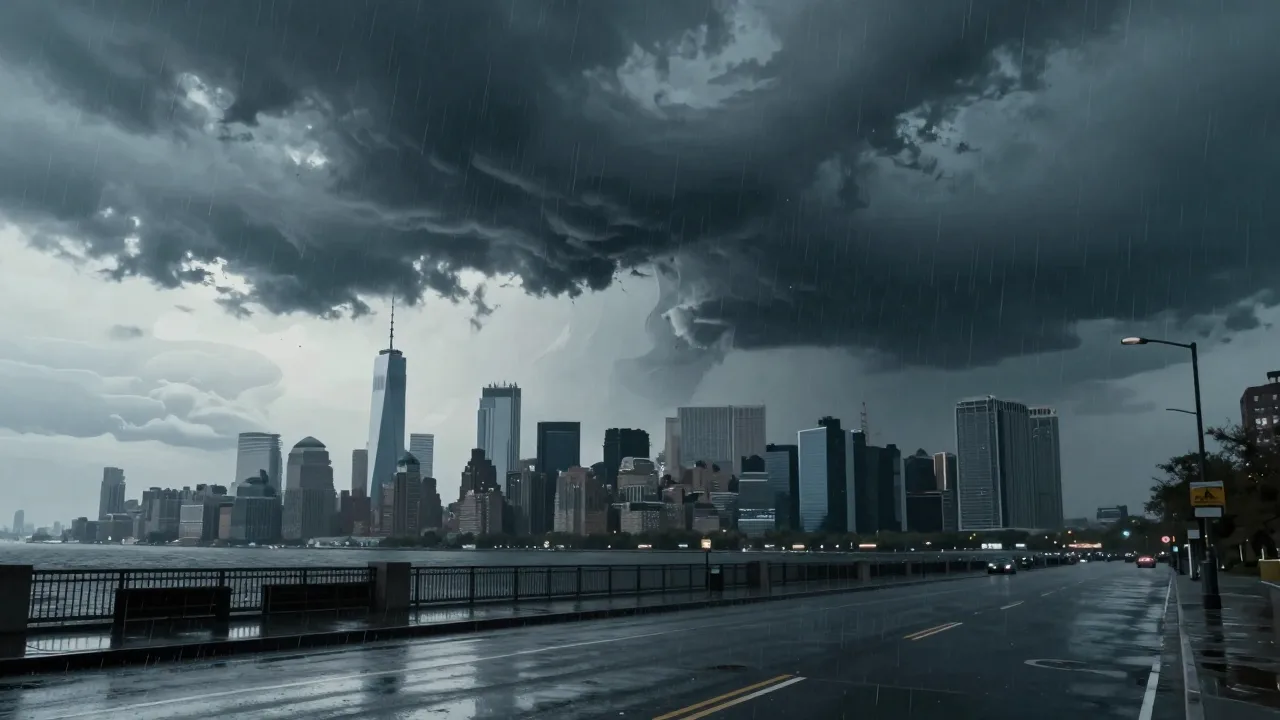
Is a hurricane coming to New York?
Searching Hurricane New York does not automatically mean a hurricane is on its way. New York can be affected by tropical storms, hurricanes, their remnants, and coastal flooding, but a named storm must be checked through current official forecasts before anyone makes travel or safety decisions. As of September 28, 2026, do not assume a hurricane is imminent simply because the term is trending. Look for an official hurricane watch, hurricane warning, tropical storm watch, or tropical storm warning for your exact county. The difference matters: a watch means conditions are possible, while a warning means they are expected soon enough that preparations should be completed.
New York's risk is not limited to a direct landfall. A storm passing well offshore can still produce dangerous surf, rip currents, coastal flooding, heavy rain, and strong winds. That is why a comparison with hurricane risk in Houston can be useful, but it is not a substitute for local guidance. New York also faces powerful winter coastal storms, so it helps to understand the difference between a tropical cyclone and a Nor'easter affecting the Northeast.
Why hurricanes can be serious in New York
New York has a long Atlantic coastline, low-lying neighborhoods, major transit systems, dense housing, and millions of people whose daily routines depend on electricity, roads, rail service, and mobile networks. Storm surge is often the most dangerous coastal hazard. It can push water into streets and buildings before, during, or after the period of strongest winds. Heavy rainfall is another major concern, particularly where basements, underpasses, and drainage systems can flood quickly.
City life also changes the practical meaning of a storm forecast. Crowded places such as Times Square and central Manhattan may be far from the shoreline, yet disrupted subway service, falling branches, flooded roads, and power outages can still make getting around difficult. Large events can be postponed or cancelled, including games connected to the New York Mets schedule. Check the organizer and local authorities rather than relying on social posts.
Where to get reliable hurricane updates
For a possible New York hurricane, start with the National Hurricane Center for storm position, forecast cone, watches, warnings, rainfall outlooks, and wind probabilities. Then check the National Weather Service office serving your area, New York City emergency alerts, county notices, and your local transit agency. Forecast cones show the probable path of a storm's center, not the full area where rain, wind, or flooding may occur.
Avoid treating a single weather graphic as a complete forecast. Conditions can change well outside the cone, and a storm's strongest impacts may arrive far from its center. Regional weather coverage, including guides such as how city-focused weather reporting works, can help explain local impacts, but official alerts should guide urgent decisions. The same principle applies to other hazards, from wildfire emergency updates to reports of flash flooding in national parks.
What to do before tropical weather arrives
Make a simple plan before a warning is issued. Know whether you live in an evacuation zone, identify where you would go, and decide how family members will communicate if mobile service is unreliable. Keep medications, identification, water, shelf-stable food, flashlights, batteries, cash, chargers, and pet supplies ready. A basic kit should be portable, because an evacuation order may leave little time to gather essentials.
Power preparation deserves special attention. Charge phones and an emergency-ready laptop before winds increase, but never run a generator indoors, in a garage, or near windows. People researching backup plans may encounter resources such as Power Grid Generator for emergency electricity backup planning and Self Sufficient Backyard for home resilience and food planning. Treat any product claim carefully, follow local fire rules, and prioritize proven safety equipment and official instructions.
Protect your home, pets, and travel plans
Bring loose outdoor objects inside, clear drains only if it is safe to do so, and avoid parking under trees or in known flood zones. If you own a shed or outdoor structure, inspect weak latches and unsecured furniture, especially if you have been considering an outdoor bar shed for a backyard space. Do not climb onto a roof or attempt last-minute exterior repairs once winds and rain begin.
Pets need an evacuation plan too. Keep carriers, leashes, food, vaccination records, and any medication accessible. An enclosed setup such as a safe outdoor catio is not a place to leave an animal during a storm. For broader preparedness ideas, guidance for a family hiking emergency kit can also be useful when building a lightweight grab bag.
After the storm: avoid the second wave of risk
Do not drive through floodwater, walk into standing water, or touch downed power lines. Follow official reopening notices for roads, parks, and transit. Flood hazards can remain after rain stops, as closures following flooding concerns at Watkins Glen State Park illustrate. Photograph damage for insurance purposes, but do not enter a damaged building until authorities say it is safe.
For the clearest answer to Hurricane New York, use the current official forecast, identify your local hazard, and prepare early without panic. toughestblogger recommends treating a viral search as a prompt to verify, not as proof that a disaster is already underway.
People also ask
Can a hurricane hit New York?
Yes. New York can experience hurricanes, tropical storms, storm surge, heavy rain, coastal flooding, and strong winds, even when a storm does not make a direct landfall nearby.
How do I know if a hurricane warning affects me in New York?
Check the National Hurricane Center, National Weather Service, and local emergency management notices for your county or neighborhood. A warning means hazardous conditions are expected and preparations should be finished.
What should I pack for a New York hurricane evacuation?
Pack identification, medication, water, nonperishable food, chargers, flashlights, batteries, cash, clothing, pet supplies, and important documents. Follow any evacuation order issued for your zone.