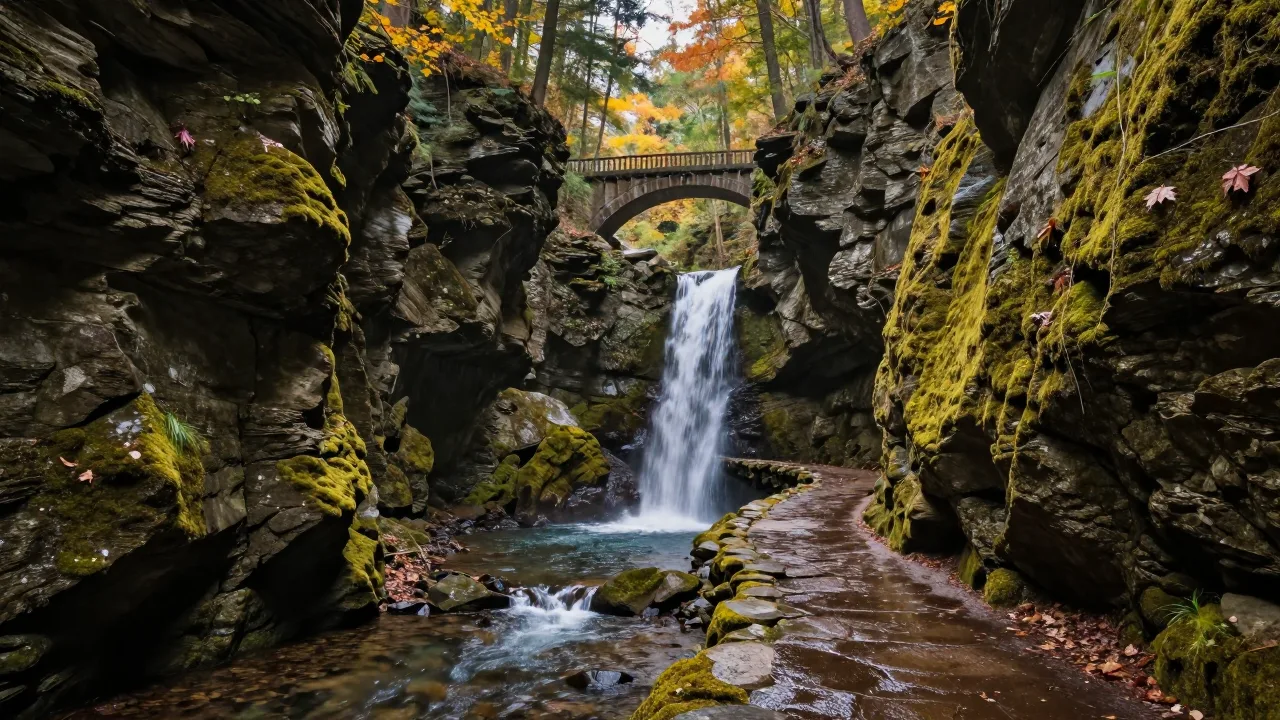
What is Watkins Glen State Park?
Watkins Glen State Park is a New York State park at the southern end of Seneca Lake, best known for a deep gorge where a stream has cut through layered rock. The central attraction is the Gorge Trail, a dramatic walking route that passes 19 waterfalls, stone bridges, tunnels and staircases. It is a compact outing with a surprisingly physical payoff. Families planning a first gorge walk can borrow ideas from this family hiking day guide, while anyone worried about the steps may prefer a gentle build-up such as the 7 Minutes Daily workout plan for improving walking stamina.
The park sits beside the village of Watkins Glen in the Finger Lakes region. Visitors often pair it with a lakefront stop, a local meal or a scenic drive, but the gorge itself deserves the time. toughestblogger readers searching the park name usually need a straightforward answer: come for the waterfall route, wear shoes that grip, and allow time for stairs, photos and changing weather.
How hard is the Gorge Trail?
The Gorge Trail is roughly 1.5 miles one way and includes hundreds of uneven stone steps. It is manageable for many visitors, but it is not a flat stroll. Spray from the falls can make surfaces slick, and the route has narrow passages and steady elevation changes. Jacob's Ladder is the section most people remember, because it concentrates a large climb into a short distance. A separate rim route can help visitors create a loop when it is open.
Start slowly and save energy for the return or shuttle plan. People training for longer hikes may find the 3 Step Stamina program for stronger walking endurance more relevant than a last-minute sprint up stairs. The gorge also makes geology visible without a lecture. For another nature-focused learning stop, see the Academy of Natural Sciences visitor overview.
| Visit choice | Best fit | What to expect |
|---|---|---|
| Gorge Trail | First-time visitors | Waterfalls, tunnels and many stairs |
| Rim route | Views and a longer walk | Woodland paths and fewer close waterfall views |
| Village entrance | Quick access to the gorge | Busy parking during peak periods |
When should you go, and what does it cost?
Late spring through early fall is the usual window for the full waterfall experience, though exact trail openings depend on weather and maintenance. Gorge sections commonly close in winter because ice, falling rock and wet stairs create real hazards. Check New York State Parks updates on the day of your visit for trail status, parking rules and any vehicle-use fee.
Spring brings heavy water flow and cooler conditions. Summer offers the longest days, but also the largest crowds. Early autumn can be a sweet spot when the air cools and leaves begin to change. For a useful reminder that seasonal timing can shape a trip, compare the planning questions around Washington DC cherry tree season. Arrive early on weekends, especially if you dislike circling for a space. The basic logic is similar to a park and ride arrival plan for a busy event: settle transport before the crowd peaks.
What should you bring?
Wear closed shoes with reliable tread, bring water, and protect your phone or camera from mist. A light rain shell earns its place even on a bright morning. The gorge has shaded, damp corners, so temperatures can feel cooler than the parking lot. Pack lightly because every unnecessary item becomes heavier on the steps.
Pets may face restrictions on particular gorge routes, so check the park rules before bringing one. For people arranging pet care before a day away, a secure setup can be informed by this catio guide for safe outdoor cat space. Families deciding between regional day trips may also appreciate the practical details in the Natural Bridge Zoo visitor guide.
How do you stay safe in the gorge?
Stay on marked paths, keep children close near railings, and never climb around closures for a better photo. Water can rise quickly after hard rain, while wet stone remains slippery long after a shower. The wider lesson is familiar from reports on flooding risks in Zion National Park: a beautiful canyon is still a drainage route. Check the forecast, and take thunderstorm warnings seriously.
Wind and colder fronts can alter trail comfort fast in upstate New York. Reading about a nor'easter weather system is a useful reminder that regional conditions can shift even when a forecast begins calmly. Do not feed wildlife, leave food scraps behind, or approach animals for pictures. That same patient, distant viewing is part of the appeal of Fat Bear wildlife watching.
Make the visit feel worth the drive
Give yourself at least a few unhurried hours, then decide whether to extend the day around Seneca Lake. The Gorge Trail is far more about footing and stairs than athletic speed. It has little in common with the extreme effort covered in Badwater 135 live endurance coverage. Bring patience, not a race plan. Watkins Glen State Park rewards the visitor who stops, looks up and lets the water set the pace.
People also ask
How long does it take to walk Watkins Glen State Park?
Most visitors should allow two to three hours for the Gorge Trail, photo stops and a return route. Add time during busy weekends or if you plan to use a shuttle when available.
How many waterfalls are in Watkins Glen State Park?
The Gorge Trail passes 19 named waterfalls. Rainbow Falls is among the most photographed because the trail runs behind part of the cascade.
Is Watkins Glen State Park open in winter?
The park is accessible year-round, but gorge routes often close seasonally because ice and wet stone make them unsafe. Confirm the current trail status before leaving home.