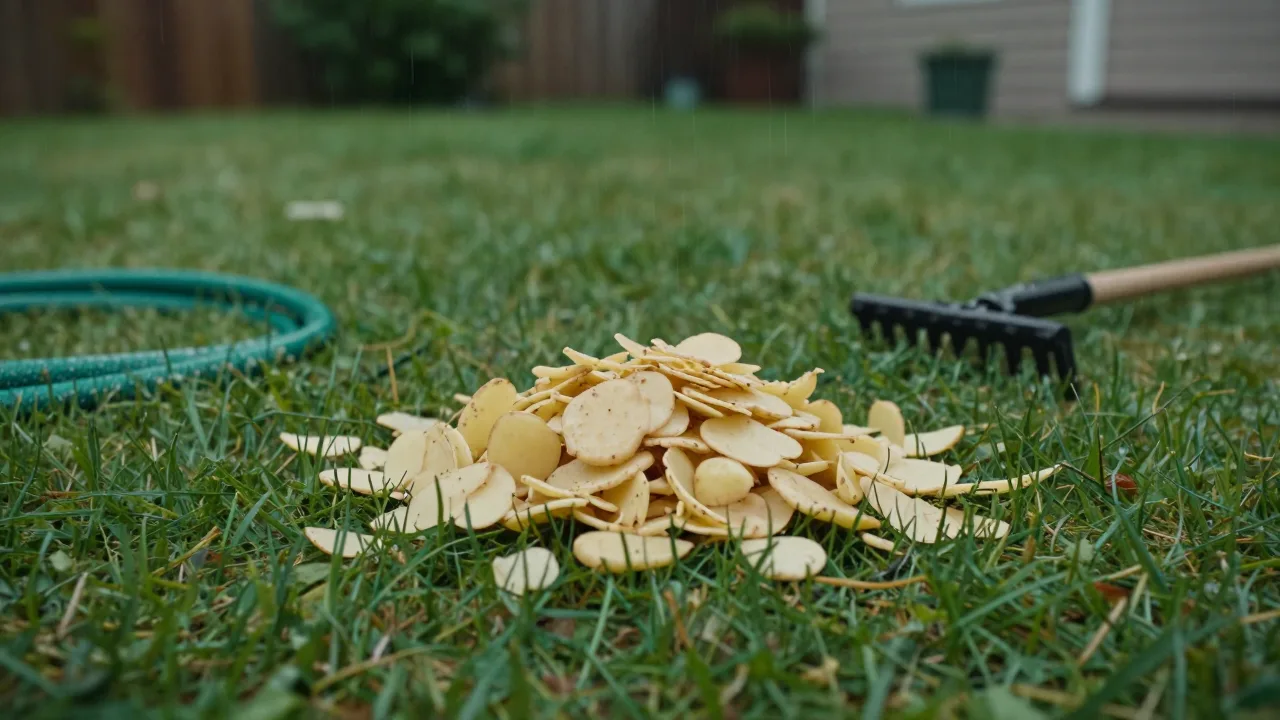
Instant mashed potatoes in a yard usually refers to an online prank: someone scatters dry potato flakes over grass before rain or a sprinkler cycle. The flakes absorb water and turn into a sticky mash that clings to blades of grass, shoes, pet fur, and lawn equipment. It is a mess, not a useful lawn treatment. People planning a productive yard are better served by a Self-Sufficient Backyard system for growing food in a small yard or a 4 Foot Farm plan for compact raised-bed vegetable growing than by dumping pantry food outside.
Why are people putting instant mashed potatoes in yards?
The trend comes from prank videos and social posts. The idea is simple: dry flakes look harmless at first, then water changes them into a paste. A lawn that gets rain, dew, or irrigation can end up with damp potato residue worked into the turf. That visual transformation is the joke, although the person who owns the yard is left with the cleanup.
Instant mashed potatoes are dehydrated potato products designed to rehydrate in a bowl. They belong with other shelf-stable foods, from home food preservation with a Harvest Right freeze dryer to discussions of new forms of processed food such as 3D meat. Their intended use is food preparation, not landscaping, animal control, or a practical joke.
What happens when potato flakes get wet on grass?
Water makes the flakes swell and soften. Once they become paste, they are harder to sweep than dry flakes and can smear into the grass. Mowing too soon may spread the material through the mower deck and across the lawn. The mess can also transfer to footwear and get tracked indoors.
The outcome depends on rainfall, the amount used, the grass length, and the ingredients in the product. Plain potato flakes and flavored instant mash are not the same thing. A packet may contain salt, dairy ingredients, oil, seasonings, or preservatives. That is why leaving it to dissolve is a poor choice. At toughestblogger, the practical answer is straightforward: remove it while it is still dry whenever possible.
Could potato flakes attract pets or wildlife?
Food left on the ground can interest dogs, wildlife, and nuisance animals. The risk rises with seasoned mixes, which may contain ingredients unsuitable for pets. Keep animals away from the affected area until the flakes are removed, particularly if a dog is likely to eat first and investigate later. A protected outdoor space such as a catio for safe outdoor cat time helps limit access, but it does not make scattered food safe.
If an animal has eaten a substantial amount of a flavored mix, or seems unwell, contact a veterinarian or local animal-welfare resource. Guidance about responsible pet care from organizations such as the San Diego Humane Society is more useful than relying on viral comments. Do not assume that a product is harmless because potatoes are a familiar food.
How should you clean instant mashed potatoes out of a yard?
Start by keeping people and pets off the area. If the flakes are dry, gently rake or scoop up the largest amount into a bag, then dispose of it in a sealed trash container. Avoid blowing dry flakes around with a leaf blower, which can scatter them into garden beds and neighboring spaces.
If rain has already turned the flakes into paste, lift what you can with a rake, shovel, or gloved hands, then rinse the remaining residue lightly into a small area and remove it rather than flooding the lawn. Clean shoes, tools, and mower wheels before using them elsewhere. The same common-sense respect for outdoor spaces applies whether you are visiting The Living Desert Zoo and Gardens or maintaining a small home lawn: food scraps should not become wildlife bait.
Will instant mashed potatoes kill mice or solve a pest problem?
Do not use instant potato flakes as rodent control. A long-running internet claim says rodents eat dry flakes, drink water, and die because the flakes expand inside them. That is not a reliable or humane pest-control method, and scattering food can create a larger attraction problem. Identify the pest first, remove access to food and shelter, and use lawful, species-appropriate control measures or a qualified pest professional when needed.
Outdoor animal behavior is rarely solved by a single kitchen trick. A visitor guide to places such as the Natural Bridge Zoo is a useful reminder that animals have varied diets and habits. Do not test a social-media theory on wildlife, pets, or rodents in your yard.
Keep pantry food in the pantry
Rice, flour, bread, snacks, and potato flakes all seem ordinary indoors. Outdoors, they can become litter or attract animals. That applies to staples associated with Lundberg Family Farms rice products, discarded Oregon Trail sourdough baking, or a spilled snack from the kitchen. Compost only suitable, unseasoned food scraps in a managed compost system, not across open grass.
The same rule covers prepared food. A bowl of homemade taco soup or a box of Costco mini pain au chocolat belongs at the table or in properly managed waste, not in a prank pile outside. A yard is much easier to enjoy when it contains plants, paths, and play space instead of wet food.
The short answer
Instant mashed potatoes in a yard are a viral nuisance prank, usually intended to become gross after water hits the flakes. Do not try it. If it happens on your property, remove the flakes promptly, keep animals away, clean affected tools, and address any real pest issue with proven methods.
What people want to know before the next rain
Why would someone put instant mashed potatoes in a yard?
It is usually an online prank. The flakes turn into a wet paste when rain or sprinklers add water, creating a difficult cleanup job.
Will instant mashed potatoes ruin grass?
A small amount may mainly create a temporary mess, but large amounts or seasoned mixes can leave food residue in turf. Remove the material rather than letting it sit.
Do instant potato flakes get rid of mice?
They are not a reliable or humane rodent-control method. Use pest identification, exclusion, sanitation, and appropriate professional or approved control methods instead.