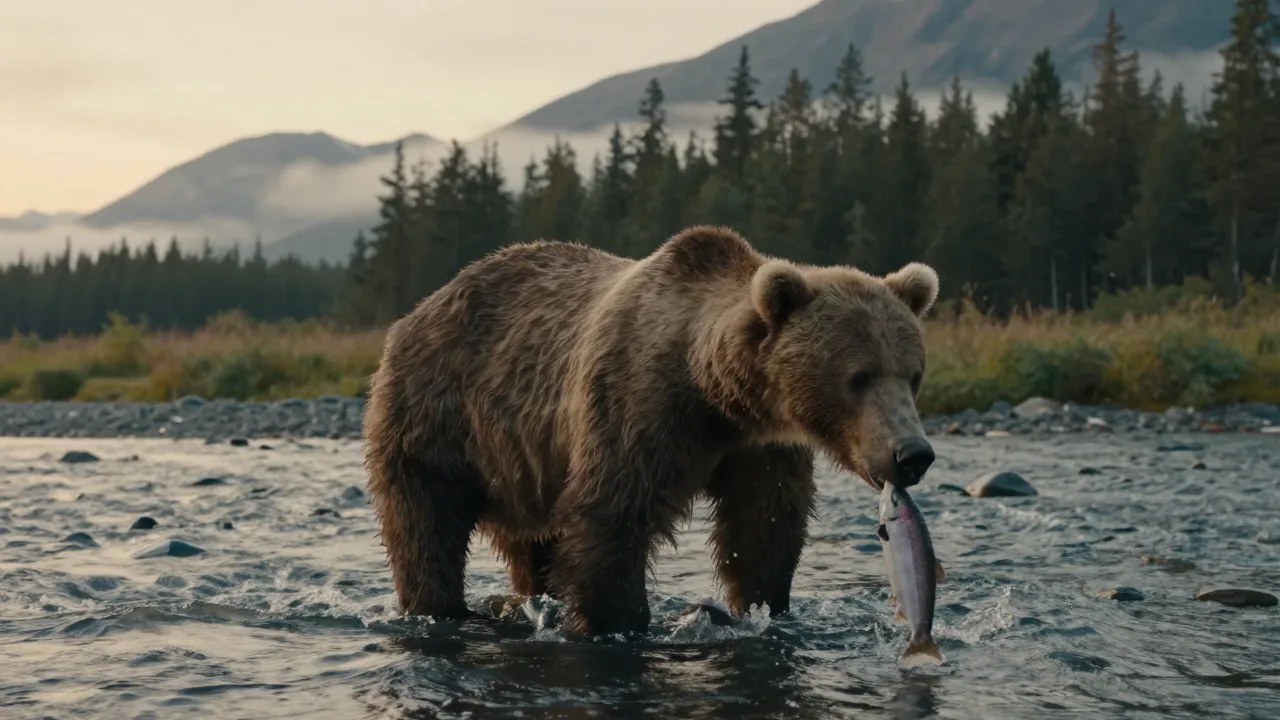
Who is Backpack Bear?
Backpack Bear is the nickname of bear 89, a well-known adult male brown bear at Brooks River in Katmai National Park and Preserve, Alaska. He became a major search topic after winning Fat Bear Week 2026, the annual online bracket in which the public celebrates the bears that have most successfully prepared for winter. If you saw the name alongside stories about what a fat bear really represents, that is the key point: this is not a contest that treats wildlife weight as a joke. At Katmai, substantial fat reserves are essential for a bear that must endure months in a winter den without eating or drinking.
Backpack won the 2026 final with 103,334 votes, ahead of bear 910, which received 98,253. The close result capped a tournament that drew more than 2.5 million votes across all matchups. For people arriving at toughestblogger with the simple search Backpack Bear, the direct answer is this: he is bear 89, the 2026 Fat Bear Week champion, and his name comes from his cubhood habit of riding on his mother Holly's back while they swam.
Holly, bear 435, was herself the Fat Bear Week champion in 2019. Park records say Backpack was introduced to Brooks River as a first-year cub in 2006. He later returned with a noticeable leg injury, recovered, and became a regular presence in the river. His life story is part of the appeal of Fat Bear Week and its bear-by-bear stories, because viewers can follow recognizable individuals over many seasons rather than seeing anonymous animals.
Why is he called Backpack?
The name is unusually literal. As a young bear, 89 would climb onto Holly's back during river crossings, making him look like a living backpack. The nickname stuck after he grew into a very large adult. It is also why social posts often call him Backpack Bear rather than simply Bear 89.
Katmai identifies him by a light brown coat early in the season, darker fur later on, and a dish-shaped muzzle. He has generally been seen fishing near Brooks Falls in early summer and in lower portions of Brooks River in fall. That kind of close observation is what makes a bear week viewing guide more useful than judging a bear from one viral photograph. A bear can look dramatically different in June and September because its food supply and seasonal needs change.
What Backpack's win actually means
Fat Bear Week began as an educational event, not a measurement contest. Katmai's brown bears gather where salmon are abundant, particularly from late June into the fall. They need to take advantage of that brief, rich food supply before entering winter dens. A large bear has often succeeded at finding food and limiting unnecessary conflict, although a single image cannot tell the whole story of its health.
Backpack's calmer reputation made his win especially popular. Large adult males can compete intensely for favorable fishing spots, yet Backpack has often been observed using access to food and timing rather than constant confrontation. The result is a useful reminder that wild animals are individuals. It is the same reason viewers become absorbed in stories about a humpback whale seen in the wild or a pelican's coastal feeding behavior: animal behavior is compelling when it is connected to a real ecosystem, not turned into a human drama.
Can you still see Backpack Bear?
Fat Bear Week voting has ended, but bear cameras and official Katmai resources remain the sensible place to look for seasonal updates. Availability changes with the bears' movements, weather, camera operations, and the time of year. Do not expect a live stream to show Backpack on demand, and do not treat old clips as proof that he is currently at a particular spot.
If watching bears inspires a trip, plan around safety rather than a hoped-for close encounter. A family hiking trip with wildlife awareness requires distance, food-storage rules, and attention to ranger guidance. That matters whether someone is reading a zoo visitor guide or preparing for a genuine protected-area visit. Wild bears must never be approached, fed, followed, or treated as photo props.
Why Backpack Bear is trending now
His 2026 championship, close final vote, memorable origin story, and visible late-season transformation made Backpack a natural breakout figure. The timing also helps. Fat Bear Week takes place as many people are searching for autumn nature activities, from a local pumpkin patch near me to a Watkins Glen State Park visitor plan. Backpack offers something different: a real, ongoing wildlife story that can be followed from home.
The broader lesson is not that people should copy a bear's pre-winter eating habits. Bears are adapted to a very specific environment and biology. It is about understanding preparation in context. A Self Sufficient Backyard guide for growing and storing household food may help a household think about resilient food supplies, while a Power Grid Generator guide for planning household backup power addresses a different kind of preparedness. Neither has anything to do with handling wildlife, and neither replaces park rules.
Finally, Backpack's popularity points back to habitat. Salmon support bears, birds, people, and a web of other life in Katmai. That is why stories about Washington State fires and habitat disruption or flooding risks in national parks matter beyond the immediate headlines. Backpack Bear is entertaining, but the reason he exists as a champion at all is a functioning salmon ecosystem.
People also ask
Who is Backpack Bear?
Backpack Bear is bear 89, an adult male brown bear at Brooks River in Katmai National Park and Preserve. He won Fat Bear Week 2026.
Why is bear 89 called Backpack?
As a cub, he often climbed onto his mother Holly's back while they swam across the river. The visual resemblance to a backpack gave him his nickname.
Who won Fat Bear Week 2026?
Bear 89 Backpack won the 2026 Fat Bear Week final, receiving 103,334 votes to bear 910's 98,253.